
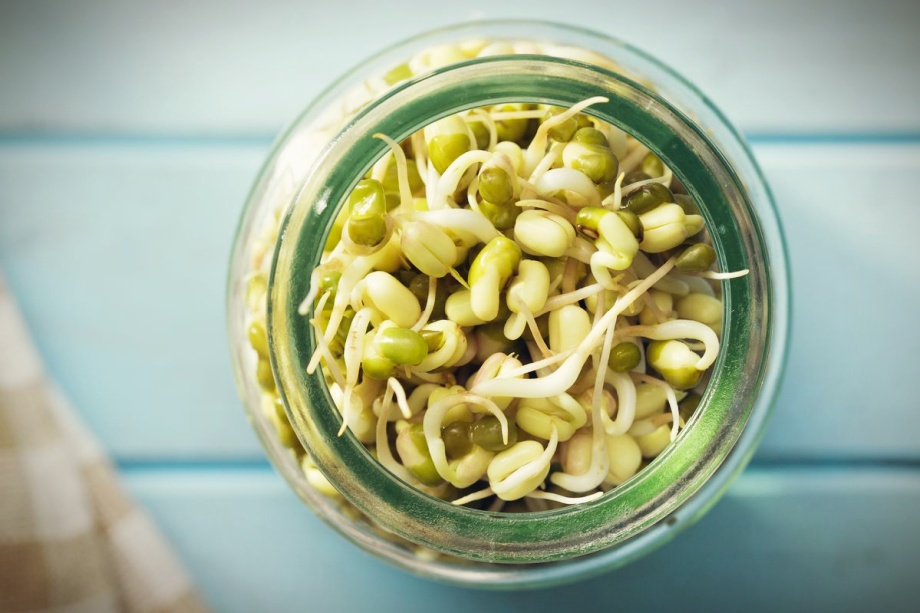
If you haven’t tried sprouts before, then now is the time. Sprouts are a yummy, crunchy addition to your diet. They pack a nutritional punch, and their benefits shouldn’t be overlooked. You can enjoy them raw or lightly cooked. Though when cooked, they lose a little of their nutritional value.
If you are on a mission to improve your diet and health, you should consider these antioxidant-rich powerhouses. These days, with the number of health-conscious people on the rise, alfalfa, broccoli, beet, bean, and sunflower sprouts have become common in many supermarkets.
They’re one of the best food ingredients, but what not many people are aware of is that they are also super delicious!
Top 5 Health Benefits Of Sprouts
1. Rich in Enzymes
Sprouts are an excellent source of enzymes. What are enzymes, you may ask? Enzymes are protein substances that serve as catalysts for your body systems to function well. They make sure that your body can absorb essential nutrients from the food that you eat.
Raw vegetables and fruits are rich sources of enzymes. According to health experts, sprouts are better sources with 100 times more enzyme content than veggies and fruits. Thus, the consumption of sprouts optimizes the functions of your body systems.
2. Better Quality
Beans, grains, seeds, and legumes contain enzyme inhibitors and phytic acid in the outer layer to protect them from being eaten en masse to ensure the survival of the species. These compounds, also called antinutrients, make beans, grains, seeds, and legumes harder to digest.
Phytic acid interferes with the bioavailability of nutrients by binding to them. The binding of phytic acid diminishes the quality of nutrients you get from seeds, nuts, grains, and beans.
When we soak, ferment, or sprout them, phytic acid and the enzyme inhibitors are neutralized. Furthermore, soaking starts the production of many beneficial enzymes and breaks down gluten and other proteins so they become easier to digest!
3. Cell Regeneration
As a superfood, sprouts offer the strongest support in regenerating cells, according to Professor Edmond Szekely. This is crucial in the fight against free radicals. Sprouts supply your body with antioxidants to fight free radicals and prevent their damage. They pave the way for cell regeneration and the prevention of life-threatening diseases such as cancer
10-day whole food reset plan: A SIMPLE CLEANSE OF BODY AND MIND
A healthy body reset to lose weight, eliminate toxins, and kick-start your new way of life. No cranky starving process on a dash of lemon juice and a single bean, but a 10-day transformation to rev your weight loss engine and live a healthier life.
4. Increases Fiber
Another nutritional benefit of sprouts that you should not miss is their ability to increase the fiber content in your beans, seeds, nuts, and whole grains. Dietary fiber plays a significant role in cleansing your body systems and preventing digestive problems and disorders.
Further, dietary fiber is what makes beans, seeds, nuts, and whole grains effective for weight loss and detoxification. Fiber binds to toxic substances and fats to eliminate them from your system. It also cleanses your digestive tract for better nutrient absorption.
5. More essential Nutrients than other Veggies
Sprouts have 10 to 30 times MORE nutrients than normal veggies.
Bean sprouts, for instance, increase their vitamin and fatty acid content by as much as 30 times their original nutritive value.
Sprouting is one of the best solutions for your body to get essential fatty acids. They are a necessary part of the human diet because the body has no biochemical pathway to produce these molecules on its own. Therefore, they must be consumed through the diet.
Only two fatty acids are known to be essential for humans: alpha-linolenic acid (omega-3) and linoleic acid (omega-6 fatty acids). Essential fatty acids, such as omega-3 fatty acids, serve important cellular functions. Adding sprouts to your diet is one of the best ways to receive the nutritional value of essential fatty acids.
As you can see, sprouts are a SOURCE OF LIFE!
Sprouts are packed with vitamins, minerals, proteins, fiber, fatty acids, amino acids, antioxidants, and oxygen that the body needs to function properly!
The best part about benefiting from sprouts is that it would not cost you as much as it would with other superfoods. PLUS, you can grow them at any time of the year, even if you don’t have a garden or balcony. Thus, even with your budget constraints, there is no reason not to enjoy the nutritional value of sprouting.
FYI: THOUGH SPROUTS ARE AN EXCELLENT NUTRIENT-DENSE ADDITION TO YOUR DIET, STAY AWAY FROM SOY SPROUTS. READ THE ARTICLE BELOW FOR MORE INFO!
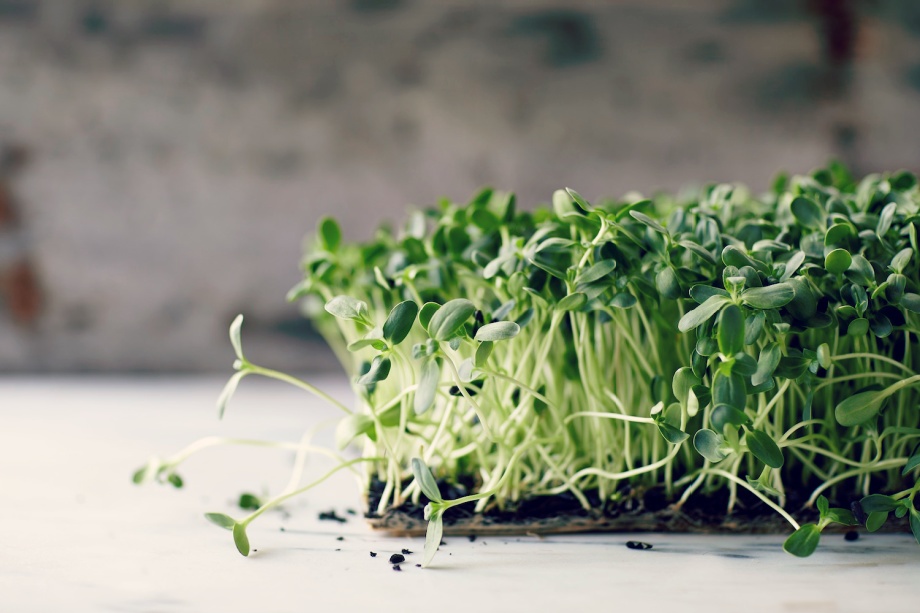
How To Sprout Grains, Legumes, and Seeds At Home
Most seeds, legumes, grains, and some nuts can be sprouted. No need to buy the expensive packets of sprouting seeds. Many dried pulses from the supermarket or health store will sprout just fine for a fraction of the price. Nuts will be harder to sprout because some of them are pasteurized or treated with heat.
We love sprouted beans, lentils, quinoa, broccoli seeds, alfalfa, and sunflower seeds.
You can buy a sprouter; they come in many variations, and some are even multilevel. They are not expensive, but they are also quite easy to make if you love DIY projects.
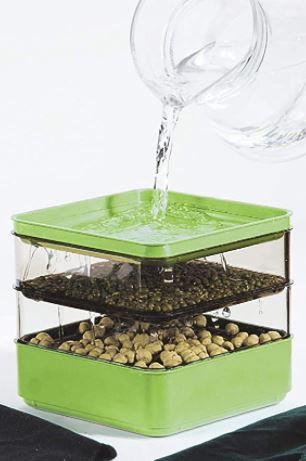
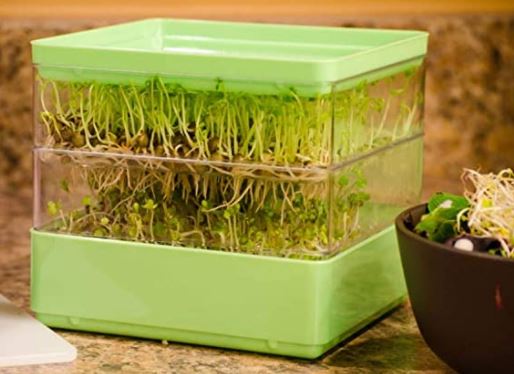
For seeds (alfalfa, broccoli, beet, etc.) we love a multilevel sprouter. You can find one HERE for less than $20.
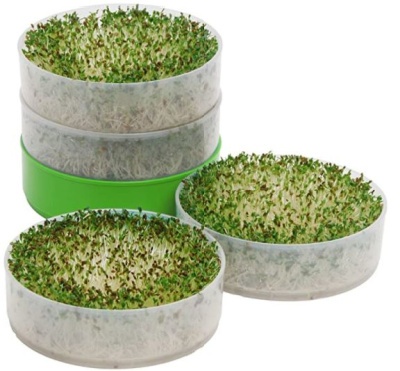
If you have a big family or want to add microgreens to your diet often, I would recommend buying THIS (see pic below) 4 level sprouter.
For beans or bigger seeds, we use a sprouting jar. You can find them HERE or you can make your own. It’s super easy.
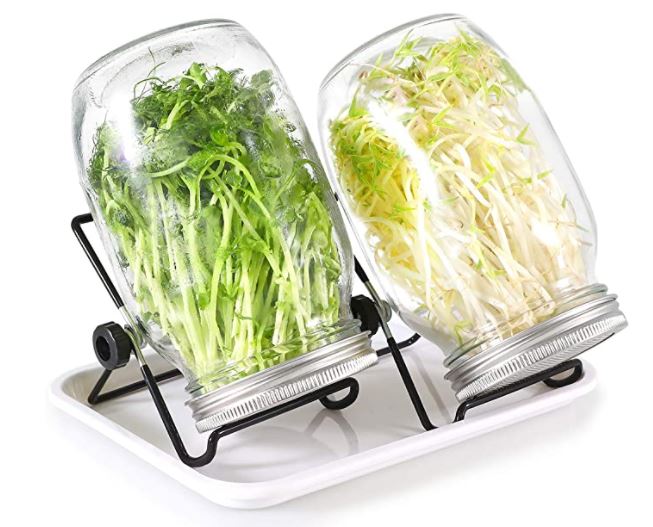
DIY Bean Sprouting Jar
- The first thing you’ll need is a big glass jar with a lid.
- Drill or punch small holes in the lid (about 3mm).
FYI: a piece of cloth or coffee filter with an elastic band, instead of the lid works as well. This is a better option if you are sprouting small seeds like alfalfa. Though like mentioned earlier, for small seeds I like to use the multi-level sprouter.

How to sprout using a multilevel seed sprouter
- Sprinkle the seeds in a single layer on the sprouting trays.
- Water the germinator from the topmost tray 2 or 3 times daily and see the water drain through all trays via the specially designed plug which uses capillary action to make sure that all layers remain moist, feeding your seeds and sprouts.
- Depending on the seeds and your climate, you will have your nutritious microgreen ready for harvest after a few days.
How to sprout using glass jars
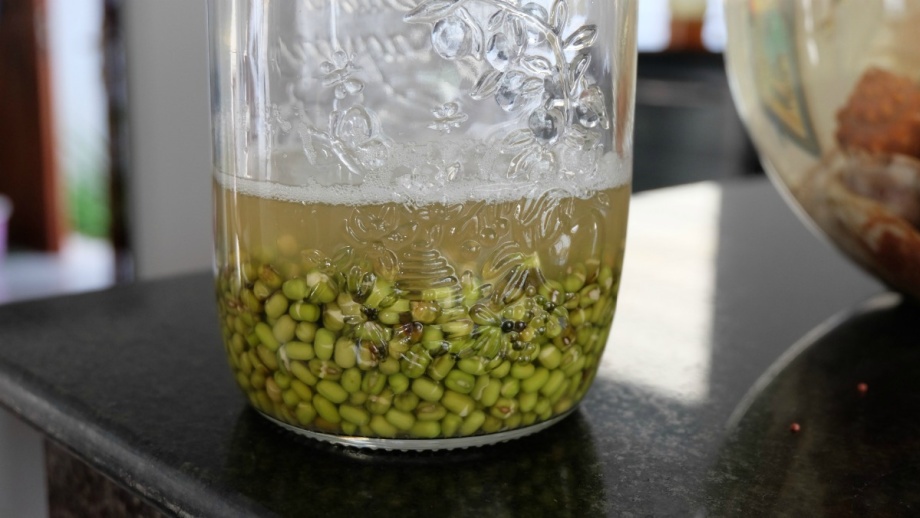
- Fill the bottom of the jar with seeds (1 type or you can make a mix as well) and cover with filtered water (room temperature). A layer of about 1 inch (2-2,5 cm) seeds will fill up the jar with sprouts, depending on the type of seeds. Some expand more than others. A general rule of thumb: add 3 times more water than seeds, grains, or beans.
FYI: if using mung or Adzuki beans use lukewarm water to soak (about 40°C or 104°F) - Soak for 1 to 12 hours (depending on the seed, grain, or bean (see overview in sprouting notes below).
- Rinse the seeds, grains, or beans with filtered water.
- Drain all the water from the jar using the lid with drilled holes or one of the handy lids you bought. Leave your jar upside down for 10-15 minutes to make sure all the water has leaked out. This will leave your seeds moistened.
- Optional step (for better sprouting): Put the jar in a closet or complete dark, warm space for 24h. Don’t close the jar with a lid, cover it with thin fabric or a coffee filter.
- Repeat steps 3 and 4 every 8 to 12 hours until the sprouts are ready. This will take about 2 to 4 days, depending on the climate you live in and the type of seed, grain, or bean you used.
- Eat them straight away or store them in the fridge for several days.
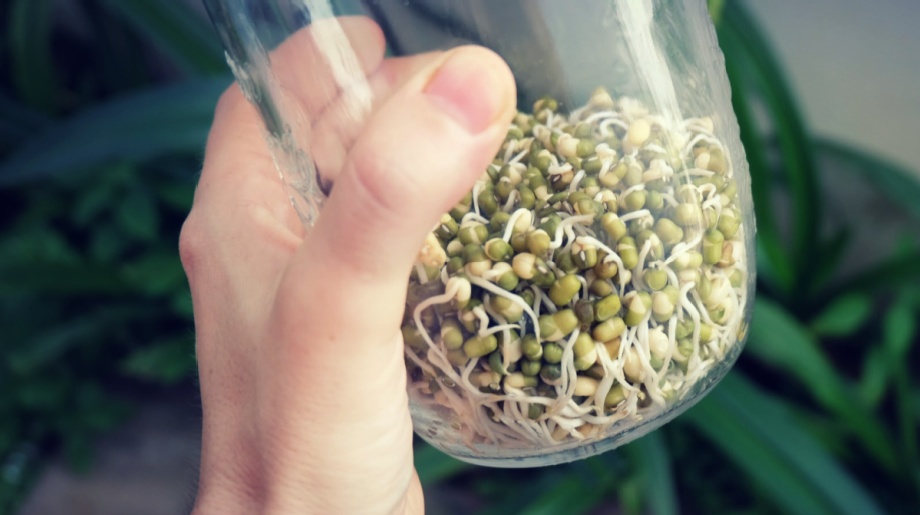
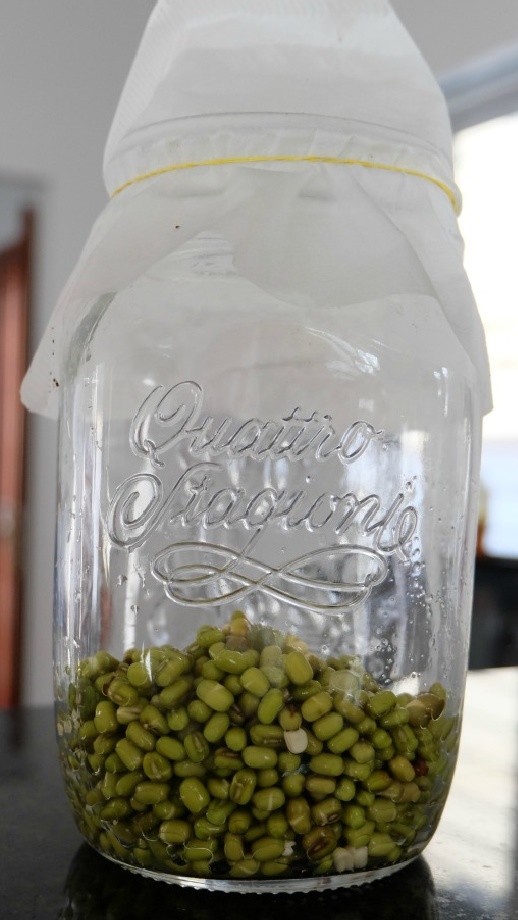
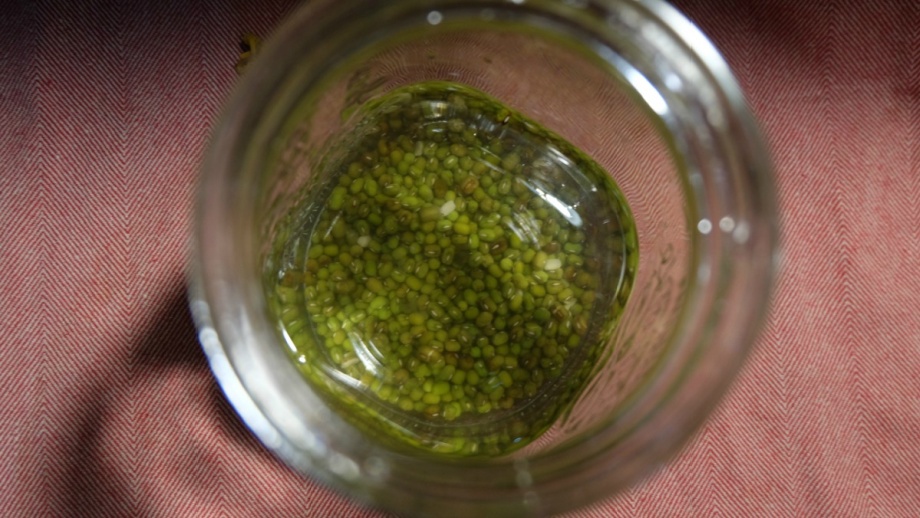
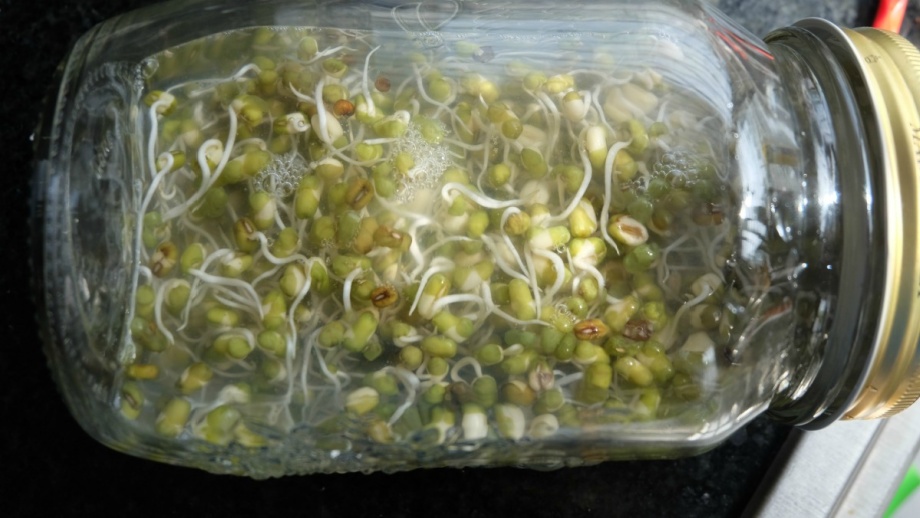
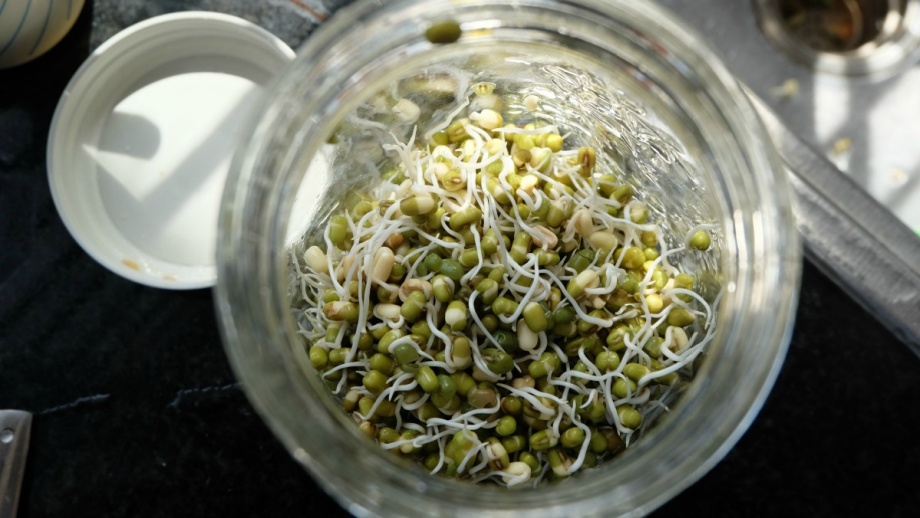
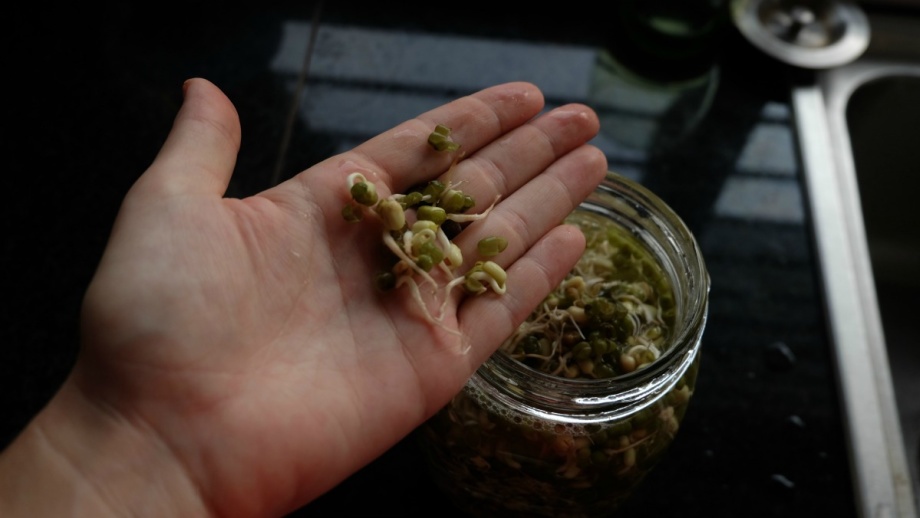
Pictures of My Last Sprouting Adventure: Mung Bean Sprouts
Sprouting Notes
#1 Sprouting Tips and Tricks
- Sprout at room temperature
- Do not expose your sprouts to direct sunlight
- For best quality sprouts, use organic seeds, grains, beans, or legumes
- Always use filtered water for soaking and rinsing
#2 Contamination Dangers
On very rare occasions seeds can be contaminated with E. coli or Salmonella, which both can cause food poisoning.
The chance of buying contaminated seeds is very small, but it has happened in the past. So make sure to buy your seeds, grains, and pulses from a reliable source.
Also, make sure you keep your sprouts in a clean environment to avoid bacterial growth. Wash your hands and tools before use and it should be alright.
We never had any issues of contamination, but it happens on rare occasions.
#3 Soaking, Sprouting, Growing Times
When it comes to sprouting beans, seeds, and grains, we can categorize them into 3 groups:
| Category 1 | Weight | Soaking Time | Sprouting Time |
| Adzuki beans | ½ cup | 12h | 4 days |
| Green peas | 1 cup | 8h | 3 days |
| Fenugreek | 2 tsp | 6h | 4 days |
| Chickpeas | 1 cup | 12h | 3 days |
| Lentils | ½ cup | 8h | 3 days |
| Mung beans | ½ cup | 8h | 3 days |
| Buckwheat | 1 cup | 3h | 1 day |
| Quinoa | ½ cup | 3h | 1 day |
⤅ Category 1 sprouts I like the grow using the glass jar method we described above.
| Category 2 | Weight | Soaking Time | Sprouting Time |
| Alfalfa | 2 tsp | 4h | 5-6 days |
| Broccoli seeds | 2 tsp | 6h | 5-6 days |
| Clover seeds | 2 tsp | 6h | 5-6 days |
| Garlic seeds | 2 tsp | 8h | 12 days |
| Radish seeds | 2 tsp | 6h | 7 days |
⤅ Category 2 are microgreens that grow best using the multilevel sprouting system.
| Category 3 | Weight | Soaking Time | Sprouting Time | Growing time |
| Wheatgrass | 1 cup | 6-8h | 1 day | 10 days |
| Snow peas | 1 cup | 6-8 | 1 day | 10 days |
| Sunflower seeds | 1 cup | 6h | 1 day | 10 days |
⤅ Category 3 has to be grown in soil. they can not fully be sprouted in a jar or sprouting tray! After soaking, rinsing, and initial sprouting day they need to be planted in soil and watered two times a day!
Though all of the above are nutrient-dense, superfood additions to your diet, some deserve their place in the spotlight!
⤅ Sunflower sprouts – THE QUEEN OF ALL SPROUTS: 30x more nutrients than normal greens. The perfect source of essential amino acids.
⤅ Buckwheat sprouts – BRAIN BOOSTER: Buckwheat is a good source of proteins, iron, and lecithin. lecithin is a mixture of neutral lipids and phospholipids, which are significant constituents of the central nervous system (CNS).
⤅ Radish sprouts: Purify the blood, help digestion, and provide intestinal balance.
Have you ever tried to sprout before? How did it go and what’s your favorite? Share them with us in the comment box below!

Amy Goodrich is a certified holistic nutritional therapist and former plant biologist. Her mission: inspiring people to adopt a more natural lifestyle to prevent/cure illness. Through her blog, Amy shares her own experiences with managing her husband's autoimmune disease through the power of whole foods. EatLove.Live covers strategies for doing so, with posts about how to gradually change your lifestyle. Amy is obsessed with cats, travel, and delicious plant-based foods that nourish and heal the body from the inside out.