Homemade Apple Cider Vinegar
Reduce food waste. Give apple scraps a second life by making apple cider vinegar at home. It is the perfect way to recycle apple scraps or preserve an abundance of apples from your apple tree.
If you have been following health trends, you must have heard about the wonders of apple cider vinegar. From improved digestion and smooth skin to hair health and weight loss, apple cider vinegar has got you covered. With the exploding popularity of this age-old pantry staple, you’re probably wondering what the buzz is all about.
Apple Cider Vinegar as A Cure-For-All
For centuries, apple cider vinegar (ACV) has been used as a disinfectant and natural cure to treat coughs and infections. Today, however, many of us use it as a cure-for-all. Its uses go from being an excellent hair conditioner and soothing minor sunburns to improving digestion, boosting heart health, and regulating blood sugar levels.
Even though many of these claims are not scientifically proved, there is no doubt apple cider vinegar is a valuable item in your natural medicine cabinet. We don’t always need science to prove the effects of natural substances on our health and happiness.
Furthermore, ACV not only works wonders on our health but it is also essential in the kitchen. I use it all the time to make dressings, vegan cheeses, marinades and so much more.
If this isn’t enough reason to make sure you got a bottle of ACV in your home, it can also be used as a natural, chemical-free all-purpose kitchen cleaner.
What is Apple Cider Vinegar
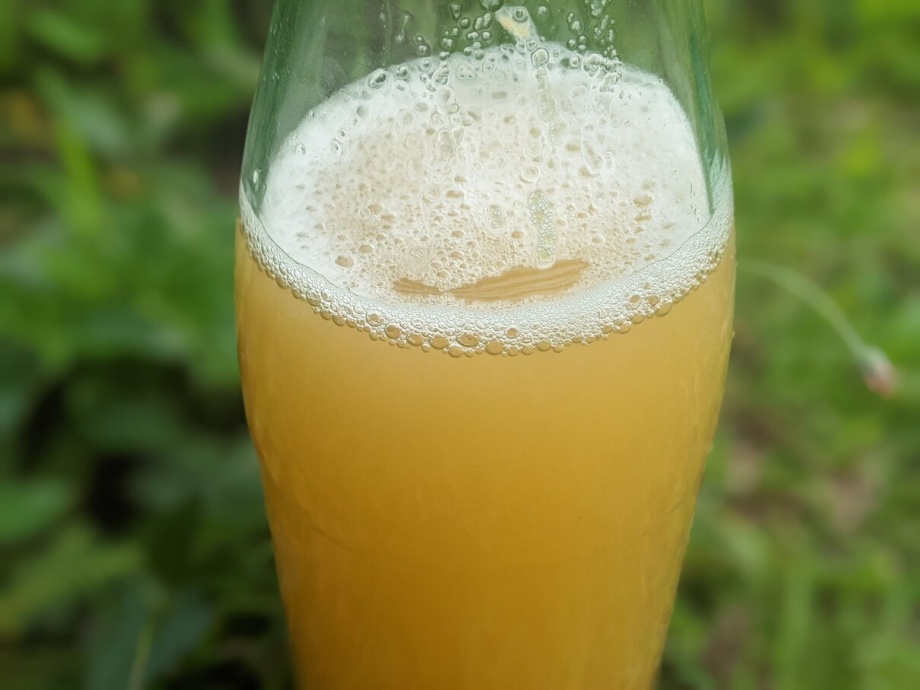
Apple cider vinegar is made through the fermentation of apples or apple scraps. Though there are a few methods that all will have the same end result, at our home we use wild fermentation, meaning wild bacteria and yeast from the environment will do the fermentation job for you.
During the first step of the fermentation process, a wild yeast that occurs naturally in the air will ferment the apple scraps and/or apples, sugar (maple syrup or honey), and water into weak alcohol or cider. After this, a bacteria called acetobacter will take over the job and further ferment the cider into vinegar.
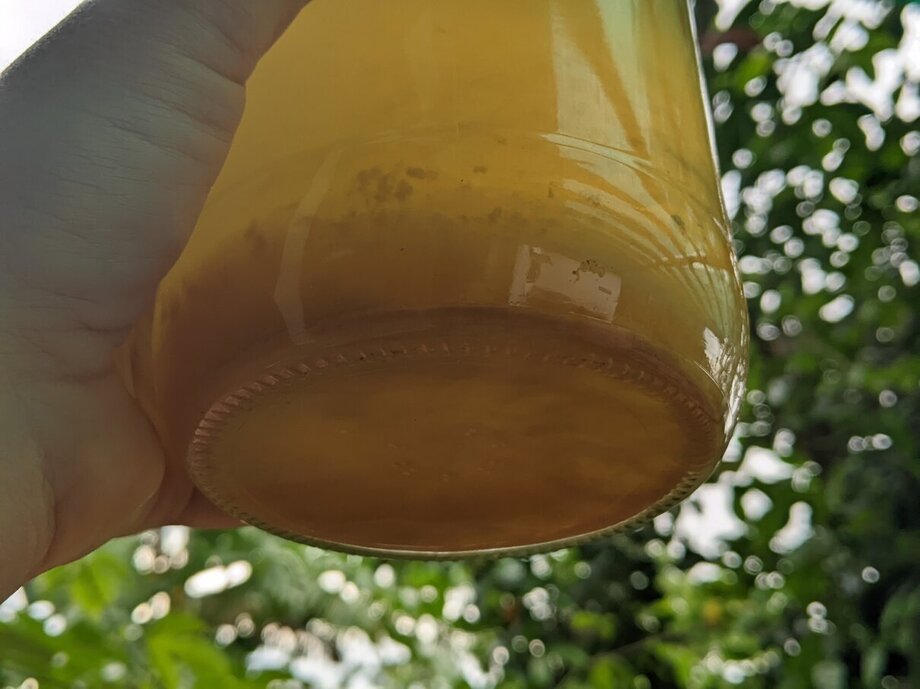
This is the wild way of making apple cider vinegar. Another way to make homemade apple cider vinegar is by using “the Mother.” What the heck is a mother you might ask. It is a mixture of yeast and bacteria. This is a byproduct of the vinegar’s fermentation process. It is what gives “real” ACV its cloudy appearance. This cloudiness, however, is often mistaken for the ACV being off. That’s why many brands started removing the mother through filtration to create a clear end product.
This is a real shame as the mother contributes to many of the health benefits of ACV, which is why many of the store-bought ACVs are no longer clear and are being branded ‘With The Mother’ on the bottle.
Servings
Makes 1 Bottle
Ready In:
4-6 weeks
Calories:
0 (per 1 tbsp serving)
Good For:
Condiment
Introduction
About this Recipe
By: Amy Goodrich
Be amazed by the simplicity of making homemade apple cider vinegar. Just like most fermented foods and drinks, the process is super easy. The hardest part is the waiting. Depending on the climate you live in, making ACV will take anywhere from 4 to 6 weeks.
Believe me, it will be worth your wait. Plus, no more apples or apple scraps that go to waste. So patience my friend!
Why not involve your kids in this process too? It might give them tools they can use later in life. Though fermentation is nothing new, it has been around for centuries, people are rediscovering this method for good reasons. Not only is it a great way to preserve food, it is so good for you. A happy gut equals a happy and healthy you!
Ingredients
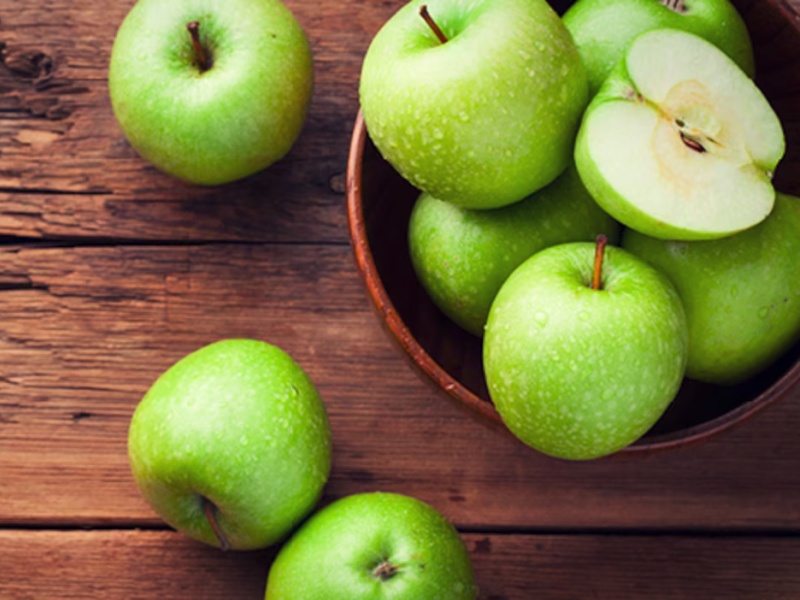
- The peels and cores of 4 apples (any variety or a mix)
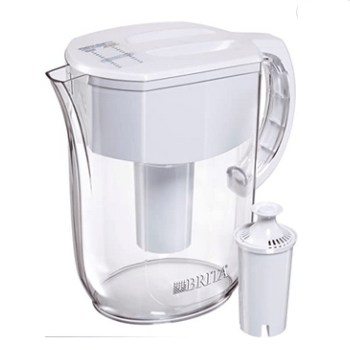
- 3.5 cups filtered water
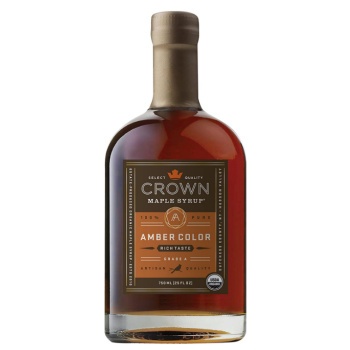
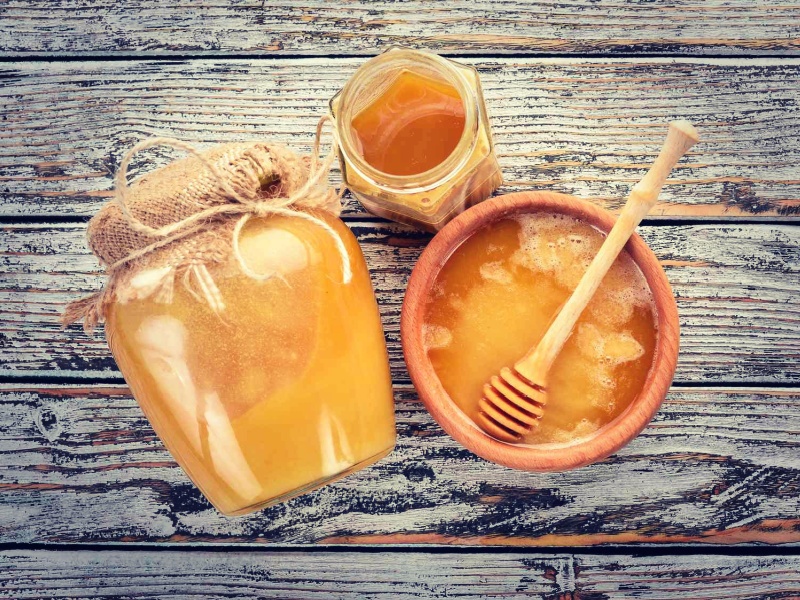
- ¼ cup of good quality maple syrup or raw honey if not 100% vegan
FYI: though I would recommend using only apple scraps to make vinegar, doing so you get to eat or use the good parts for something else, you could also use 2 whole apples to make ACV instead of only using the scraps.
Meet the powerhouse rock stars of this dish
Nutrition
For this recipe, I didn’t add the nutritional label as it simply doesn’t make sense. A serving (15 ml or 1 tbsp) of ACV contains 0 grams total carbs, 0 grams net carbs, 0 grams fat, 0 grams protein, and 0 calories
ACV’s main health and nutritional benefits are due to the number of antioxidants and probiotics, which benefit the digestive system and gut microbiome.
Step by Step Instructions
Step 1
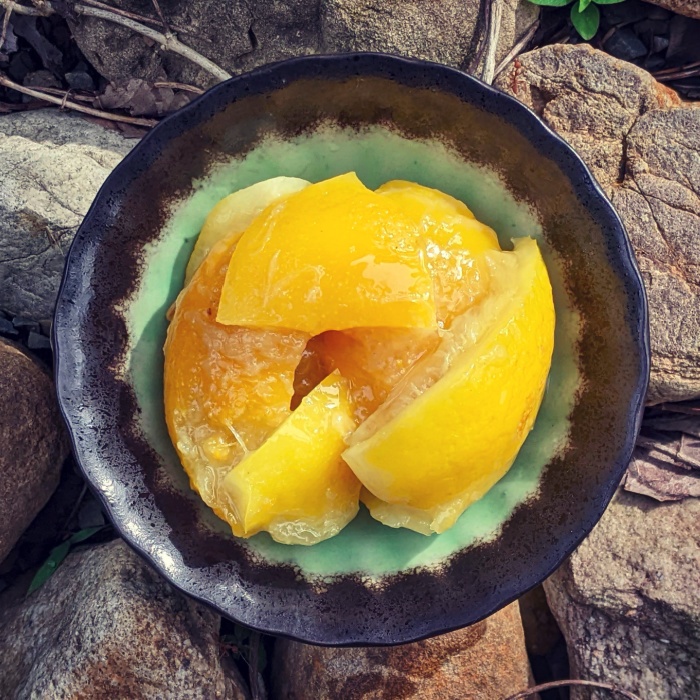
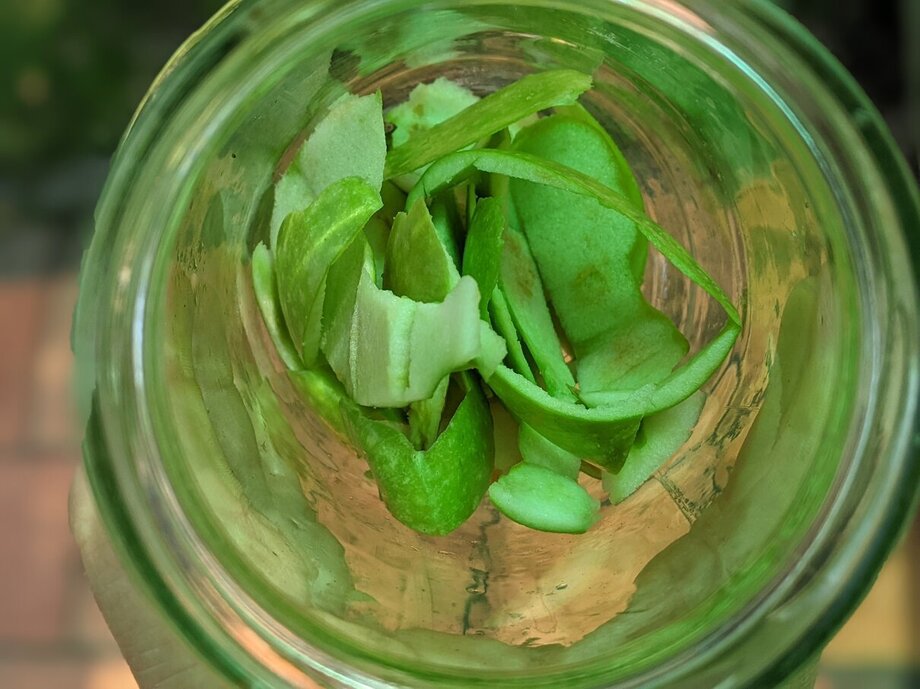
Gather the apple scraps (peels and cores) of 4 apples. Or chop up 2 whole apples.
FYI: If you don’t have the scraps of 4 apples, it is OK to add some more the day after.
Step 2
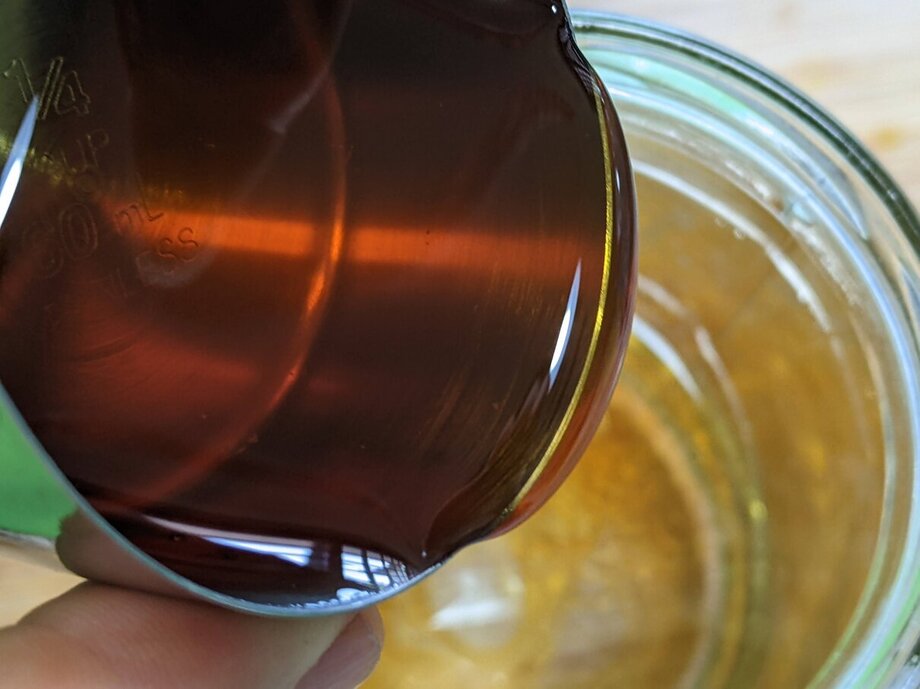
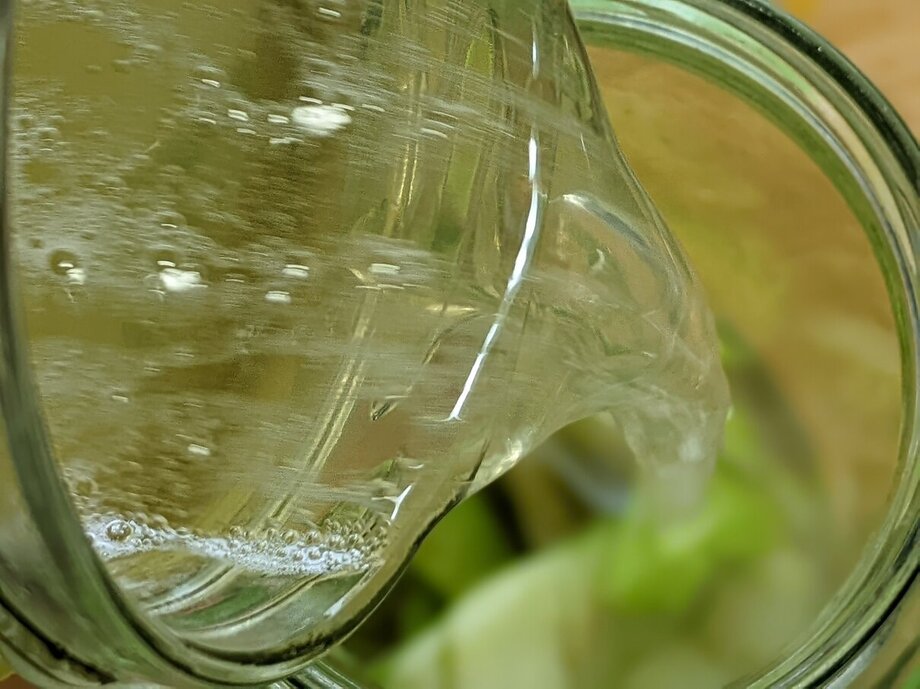
Combine the filtered water and maple syrup or raw honey into a clean jar or bowl. Shake/stir until combined.
Step 3
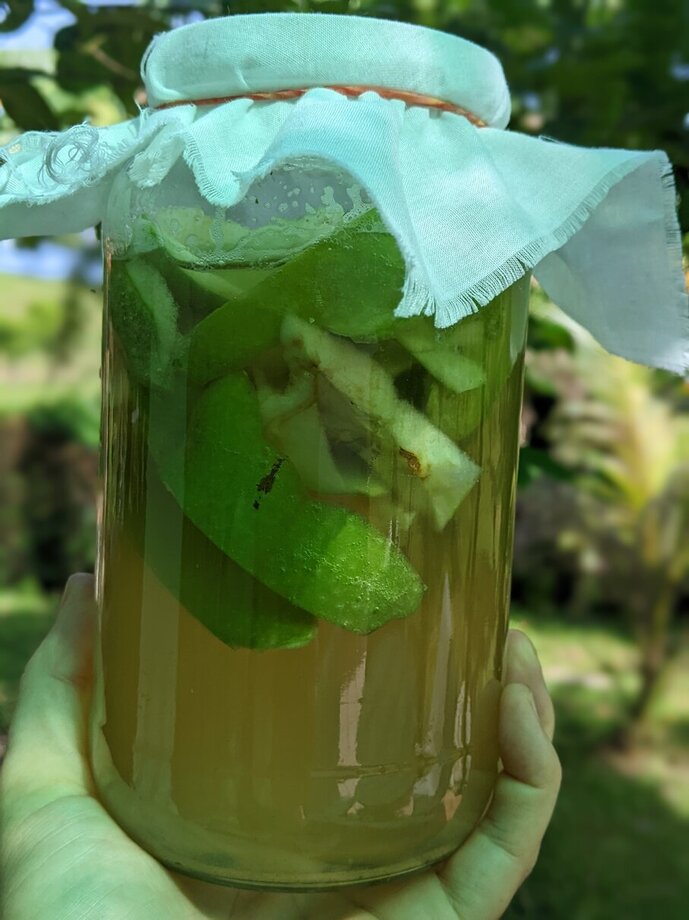
Add the apple scraps to the water/honey or maple syrup mix. Stir well. Cover with a clean towel, cheesecloth, or coffee filter and secure with a rubber band.
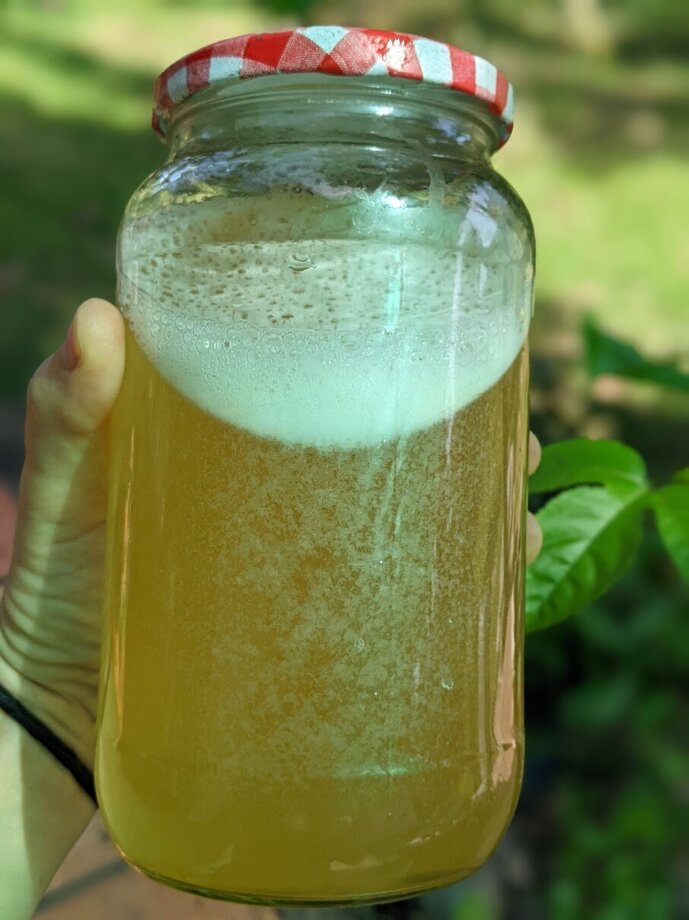
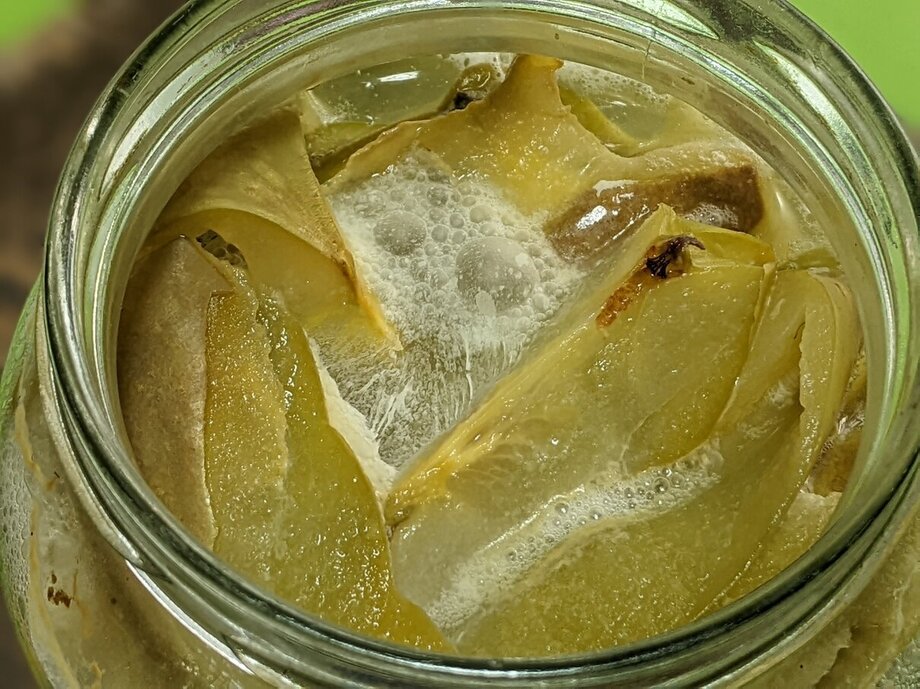
Leave the jar in a warm location out of direct sunlight. The apple scraps will float to the top and change color. That’s fine. Just push them back under the water once every day. Unlike other ferments such as sauerkraut or fermented garlic paste, this fermentation process needs air to ferment the apples into vinegar.
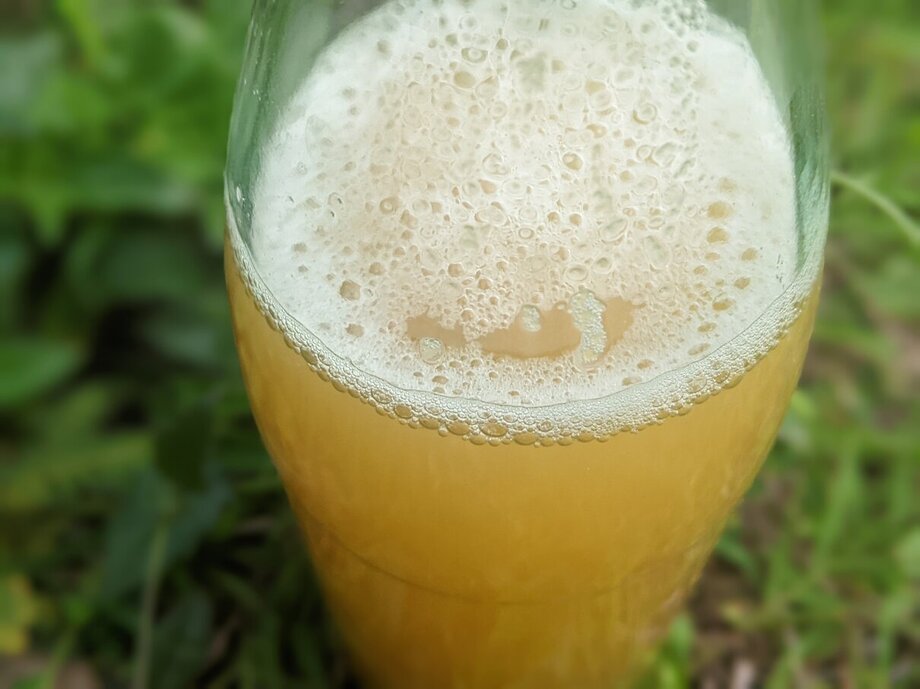
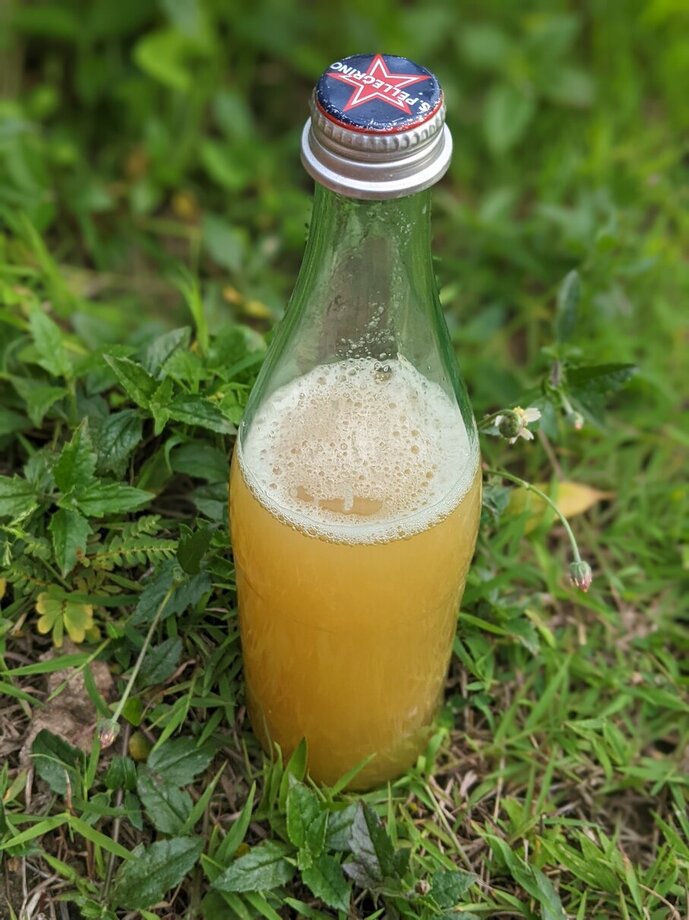
Bubbles will appear on the surface. This is a sign that fermentation is happening.

Step 4
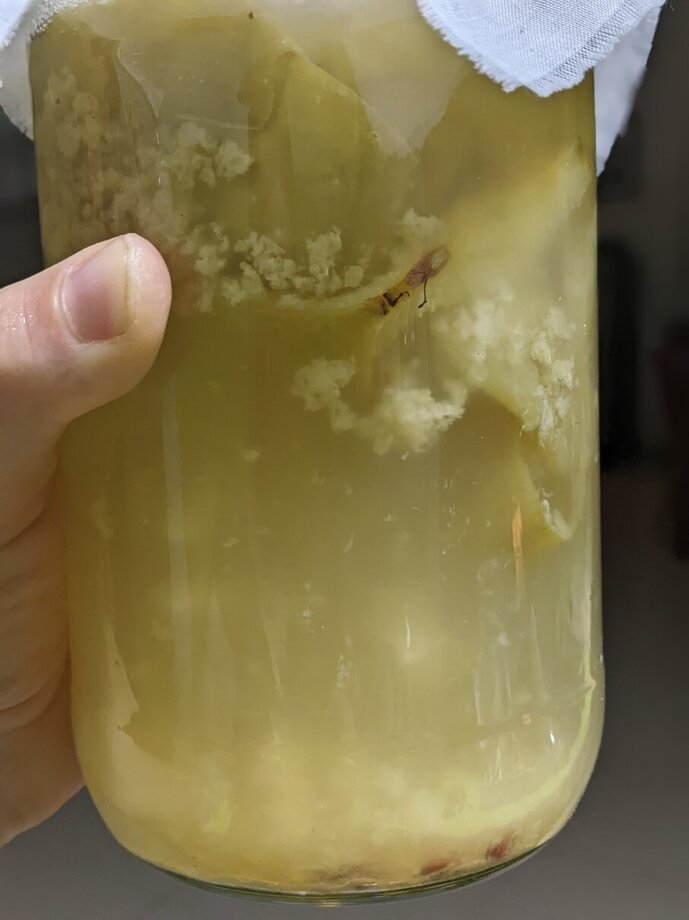
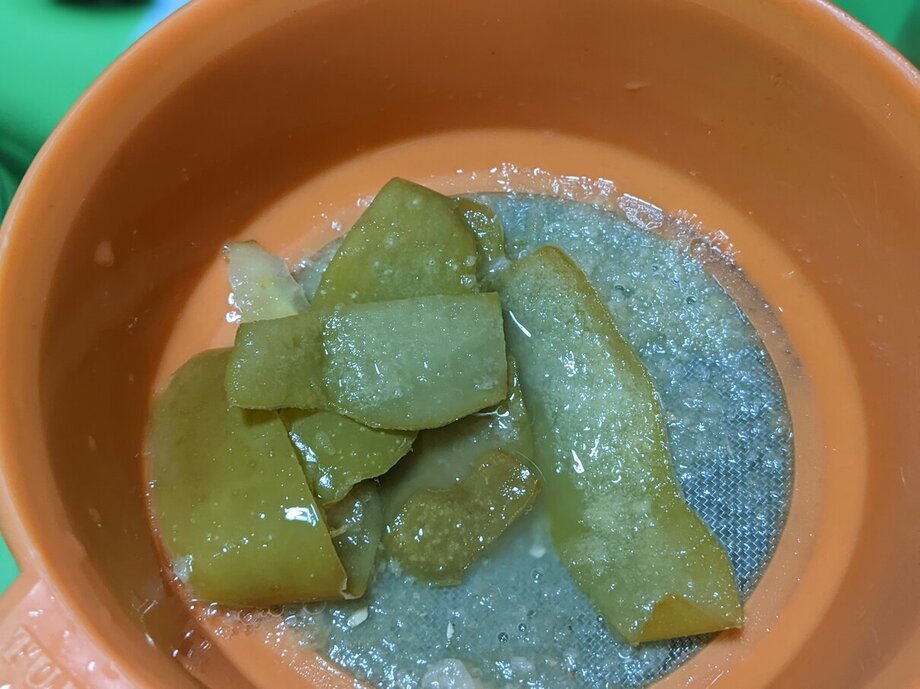
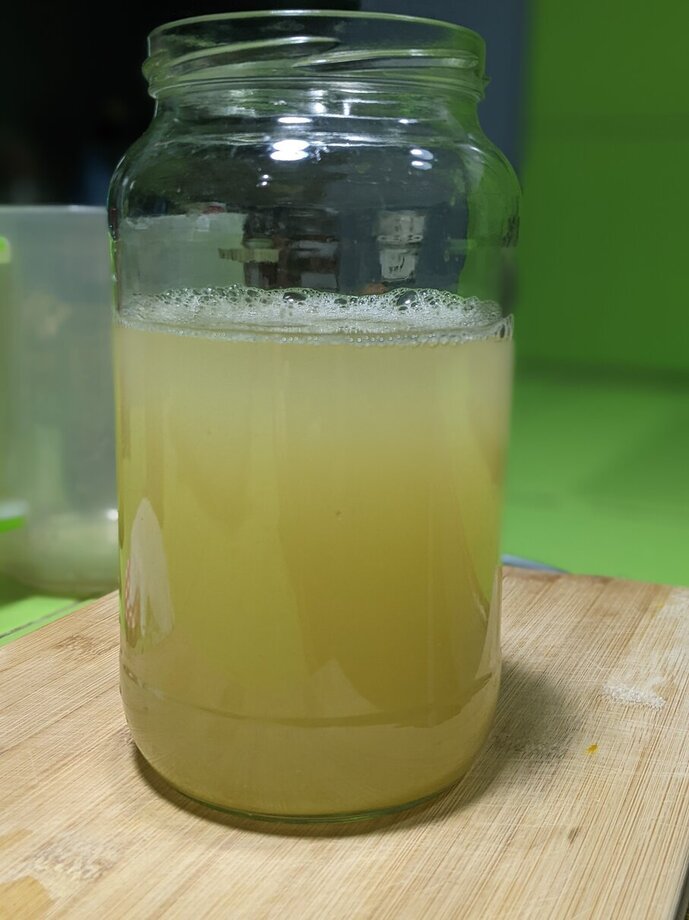
After a week you will see that the pieces of apple and/or apple scraps will start to sink to the bottom. This is a sign that the alcohol fermentation has ended. When this happens, it is time to strain the apple pieces from the liquid.
Return the liquid (aka hard cider) to a clean jar. Cover with a clean towel, cheesecloth, or coffee filter and secure with a rubber band. Leave in a warm location out of direct sunlight for another 3 to 5 weeks. The fermentation time depends on the climate you live in. As I have mentioned before, I live in the tropics and things tend to ferment a lot faster over here.
Step 5
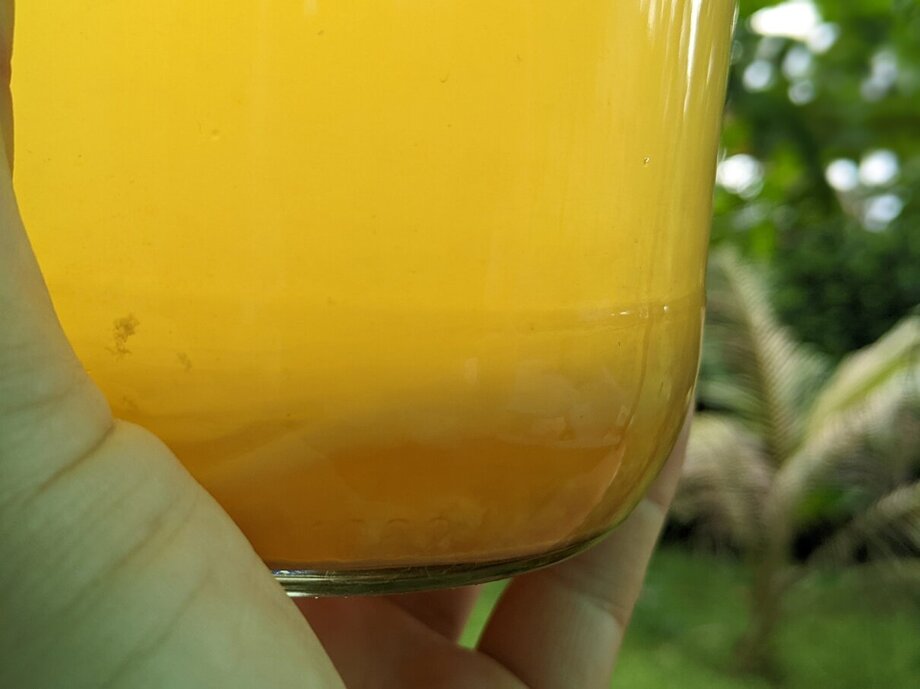
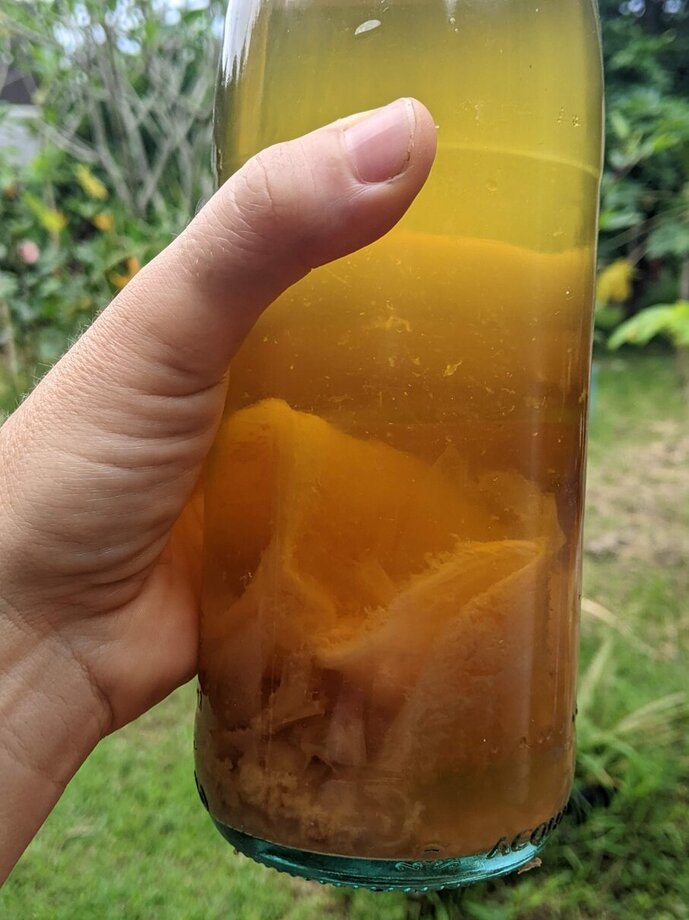
Start taste testing the apple cider vinegar after 3 weeks. You will see some pieces floating around in the vinegar. Don’t worry, the vinegar hasn’t gone off. These pieces are what they call the “mother”. Just as you have a scoby in kombucha, a mother is a byproduct of yeast and bacteria. As mentioned earlier, the mother can be used to speed up the process of your next batch of ACV. Though I usually start from scratch again.
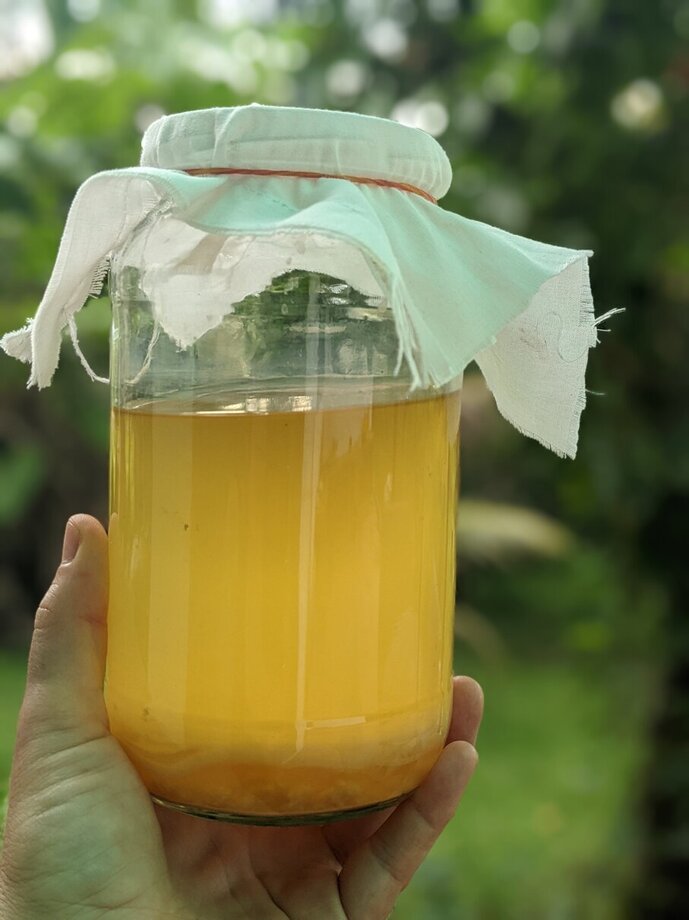
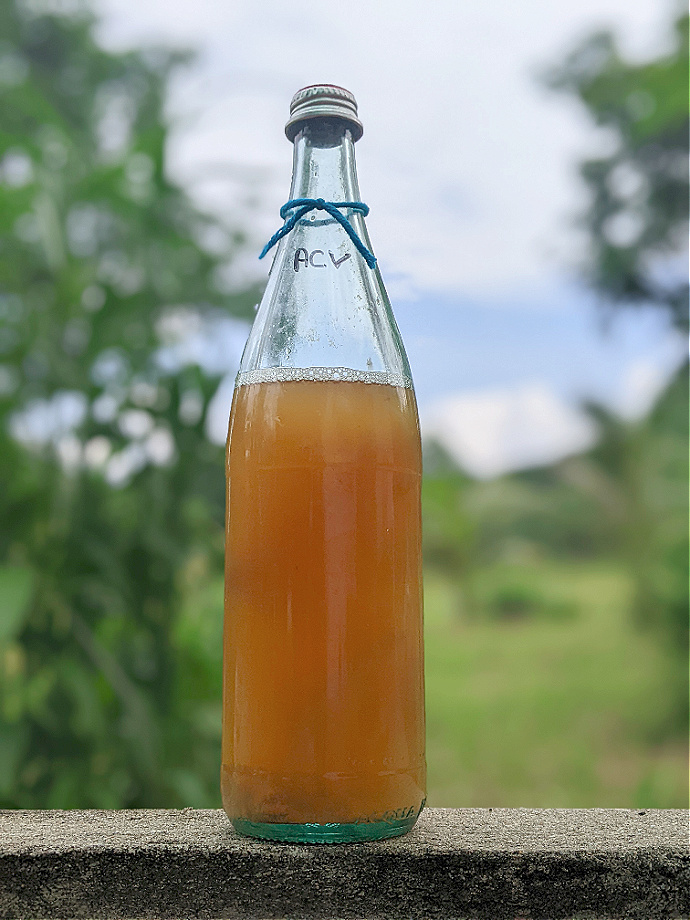
When the ACV has reached the vinegary, tangy taste you are happy with, it is time to bottle and store it in a clean bottle with a cap. Just as the ACV you buy in the store there is no need to keep it in the fridge. You can keep it at room temperature on your counter or in your kitchen cupboard.
Step 6
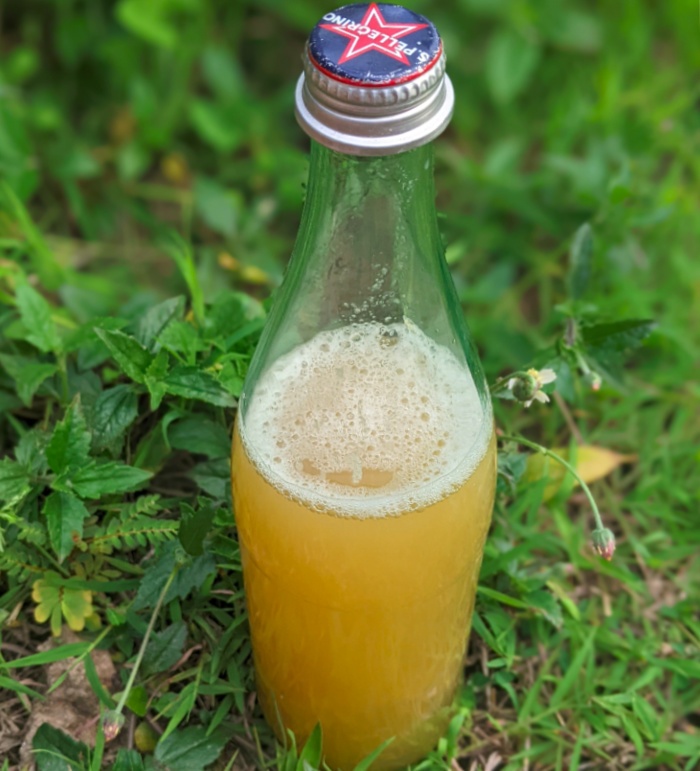
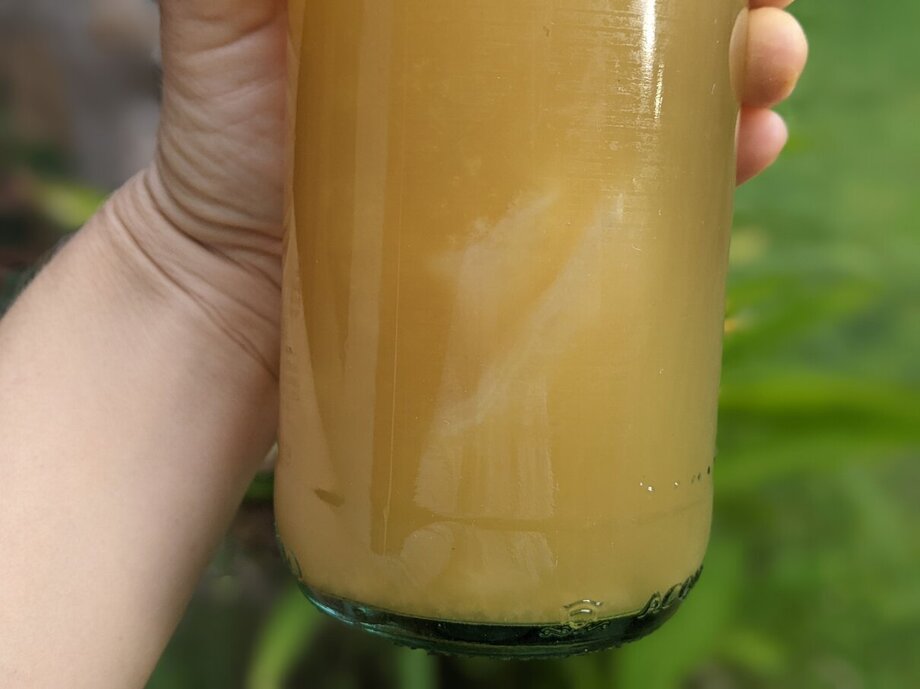
If the ACV has been sitting for a few days undisturbed on the counter or your cupboard it will look very similar to the pictures you see below. Do you see the mother? To use the ACV and get all its healing goodness into your sauces, dressing, marinades, etc. give the bottle a good shake and you are good to go.
Recipe Notes
To make ACV you can use any apple variety or a mix of different kinds. You can either use whole apples or scraps. Which of these options you choose will affect the flavor of the end product.
If using maple syrup, you might have to shake/stir a little longer for better consistency. I used raw honey this time but I have used good-quality maple syrup before. Both work. So use whatever you have available or feel comfortable with.
I mainly live a plant-based, wholefood lifestyle, my hubby still eats eggs from our chickens, organic fish, and lean meats a few times a week. In my diet, there are 2 exceptions I sometimes make. One is raw, wild jungle honey if we come across it and the other is eggs from the chickens we saved from becoming somebody’s dinner. The three of them now live a happy, worry-free life in our garden. Even though we don’t have a rooster, you can’t stop them from laying eggs… and we don’t want more babies. So we either eat them ourselves or give them away.
Anyhow enough about the choices we make in life. More about this in an upcoming blog post so stay tuned or subscribe to the EatLove.Live newsletter below so you don’t miss my stance on being vegan, vegetarian, pescetarian, or flexitarian.
Easy, Printable Recipe Card

Homemade Apple Cider Vinegar
Made from apple scraps, this apple cider vinegar will not cost you a penny. It's super easy, the only thing you will need is patience.
Ingredients
- The peels and cores of 4 apples or 2 whole apples cut into smaller pieces
- 3.5 cups filtered water
- ¼ cup of good-quality maple syrup or raw honey
Instructions
Add the apple scraps to a clean jar.
Combine the filtered water and maple syrup or honey in a clean jar or bowl. Shake/stir well to mix.
Pour the water/maple mix over the apple scraps and stir well. Push down the apple scraps/pieces as well as you can. They will float to the top again but that's fine. Cover with a clean towel, cheesecloth, or coffee filter and secure with a rubber band.
Leave the jar in a warm location out of direct sunlight. Every day, shake or gently stir the jar to mix up the contents and push the scrapes back down. Bubbles will appear on the surface, this is a good sign that fermentation is happening
After about one week, the apple pieces will start to sink to the bottom. This means that the alcohol fermentation has ended. Strain the apple pieces from the liquid or hard cider. Transfer the liquid to a clean jar cover it again with a clean towel, cheesecloth, or coffee filter, and secure with a rubber band.
Leave in a warm location out of direct sunlight for another 3 to 5 weeks. This will depend on the climate you live in.
Start taste-testing the vinegar after 3 weeks. When it has reached your desired tartness, transfer it to a clean bottle and store it at room temperature on your counter or in your kitchen cupboard.
Before using the ACV shake the bottle to homogenize. The solid parts or mother will sink to the bottom when left undisturbed for a while.
Notes
You can use any apple variety or a mix of different apples to make apple cider vinegar. Depending on which variety you use the end product will taste slightly different.
If using maple syrup, you might have to shake/stir a little longer for better consistency. I used raw honey this time but I have used good-quality maple syrup before. Both work.