Fermented Garlic Paste
Are you a garlic lover? If the answer is YES, then I am sure this fermented garlic paste will also become a kitchen staple at your home. Fermented garlic has this sweet, less sharp, caramelized flavor similar to the taste you get from roasted garlic.
Next to adding zing to your dishes, garlic has been used throughout ancient and modern history as a natural medicine. Though it’s well known for its immune-boosting properties during flu season, garlic’s healing powers don’t stop there.
Should Garlic Be Part Of Your Natural Medicine Cabinet?
Garlic has long been used medicinally by ancient civilizations to treat a variety of ailments. Though our ancestors already knew about the healing powers of garlic, in recent years a great deal of research has been done to unravel garlic’s effects on our health.
Garlic is reported to be a wonderful medicinal plant for the treatment and prevention of conditions related to the heart and blood vessels, including high blood pressure, blood sugar, and cholesterol. Furthermore, garlic is very effective against bacterial, viral, fungal, and parasitic infections. Making it an excellent choice to boost your immune system during flu season.
Next to boosting the immune system, certain compounds present in garlic possess antioxidant properties which might help in the fight against tumor formation.
Garlic thanks these amazing health effects to more than 200 bioactive compounds such as sulfur compounds (allicin, alliin and agoene), volatile oils, enzymes (allinase, peroxidase and miracynase), minerals (selenium), amino acids (cysteine, glutamine, isoleucine and methionine), bioflavonoids (quercetin and cyanidin, allistatin I and allistatin II), and vitamins A, B, C, and E.
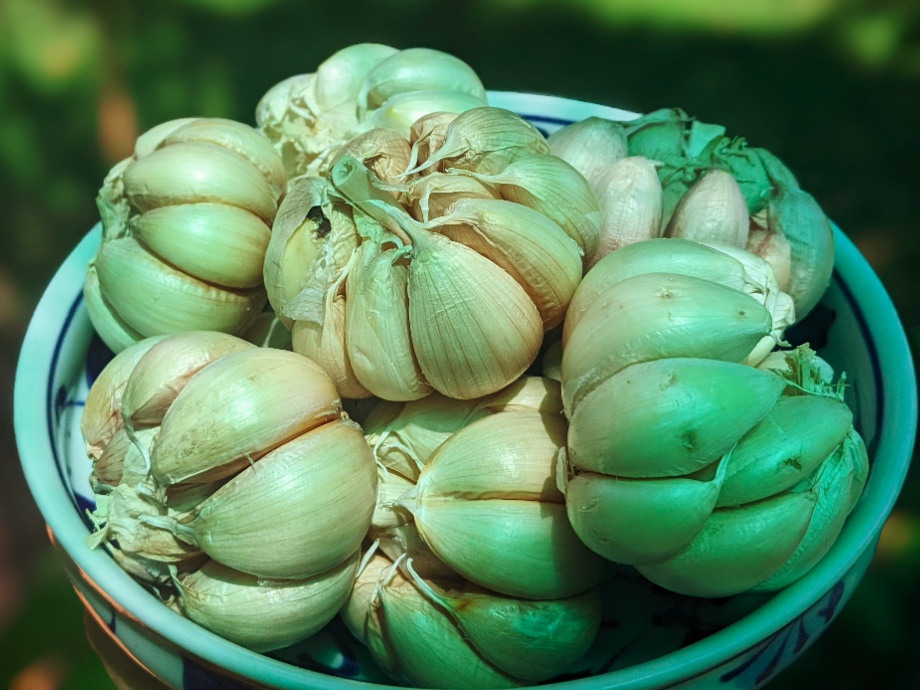
Why Choose Fermented Garlic Paste Over Garlic
First of all, fermented garlic has an amazing taste. Ever since we made this fermented garlic paste it has been a must-have staple in our kitchen. We hardly use raw garlic in our cooking anymore.
The fermentation process changes the nutrient content. Fermented garlic paste has enhanced bio-activity and is a rich source of probiotics, vitamins, and enzymes that support gut health, strengthen the immune system, and promote better health. Probiotics are important to boost gut health. Gut bacteria play an important role in overall health, such as supplying essential nutrients, synthesizing vitamin K, aiding in the digestion of cellulose, and promoting nerve function.
Just like normal garlic, the fermented garlic paste I am about to share with you works as a natural medicine. It possesses potent antiviral and antibacterial properties. So if you feel a cold coming or want to boost your immune system during the flu season, consume 1 teaspoon of the fermented garlic paste one or 2 times a day. If you cannot stomach its taste add some maple syrup or honey to enhance the flavor.
Oh and one last thing. The sulfur-containing compounds in garlic – which are responsible for garlic breath – are mellowed during the fermentation process. So no bad garlic breath after consuming fermented garlic.
Servings
Makes 1 big jar
Ready In:
2-3 weeks
Calories:
25 (per tbsp)
Good For:
Condiment
Introduction
About this Recipe
By: Amy Goodrich
We are garlic lovers. We use garlic in nearly every savory dish. Ever since we discovered this fermented garlic paste we have hardly used raw minced garlic in our cooking.
Fermented garlic has this yummy caramelized flavor similar to roasted garlic. Not only does it taste so much better than regular raw garlic, but it will also save you some time when preparing meals.
Ingredients
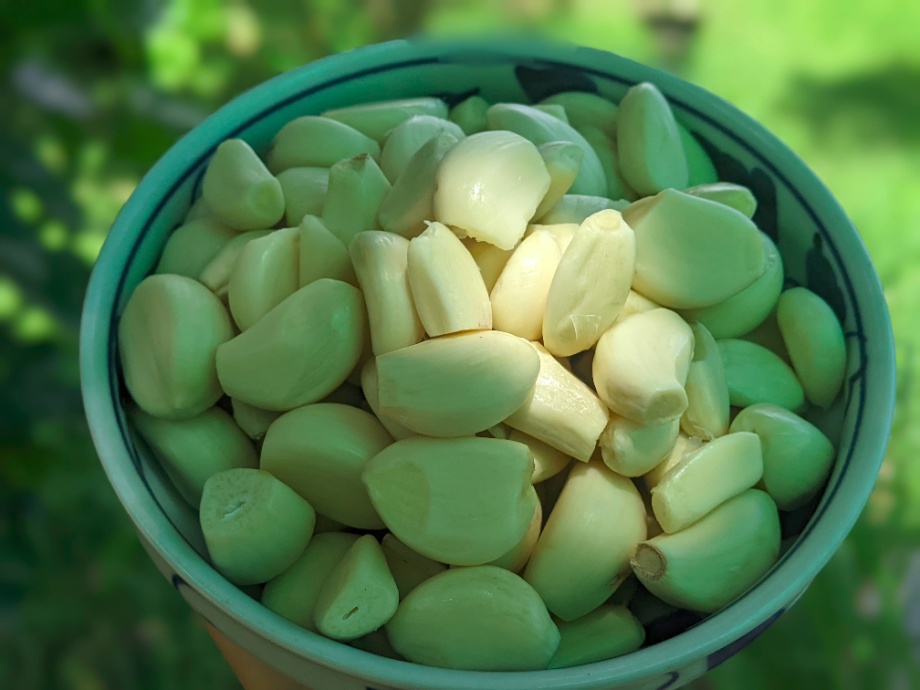
- 18 to 20 heads of garlic, peeled
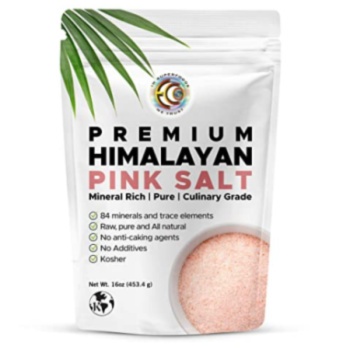
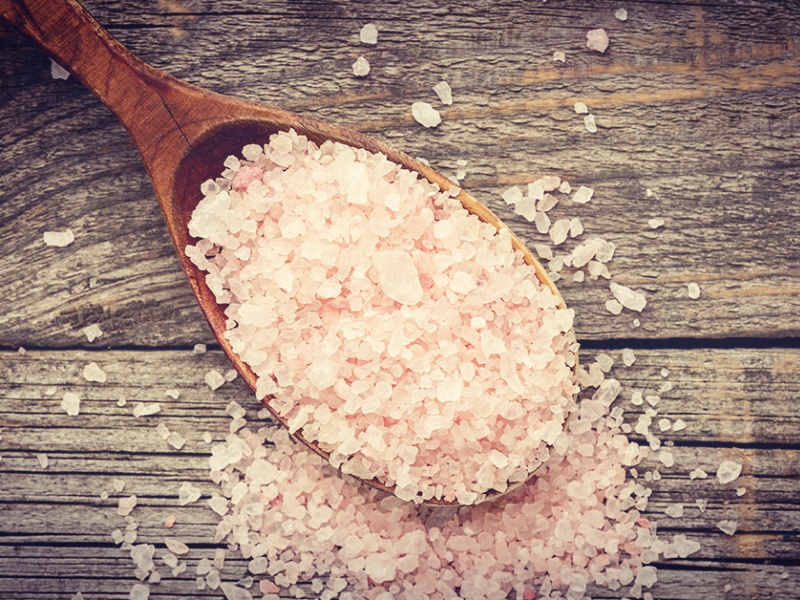
- 2-3 teaspoons of Himalayan pink salt or good-quality sea salt
- Filtered water as needed
FYI: if you have sensitive skin, wear gloves when peeling this much garlic. The first time I made this paste I ended up with red and painful fingers from the potent ginger juice. It felt like burning your fingers on the stove.
Meet the powerhouse rock stars of this dish
Nutrition
Fermented garlic paste doesn’t offer much when it comes to macronutrients (protein, fats, carbs), but it is jam-packed with health-promoting vitamins and minerals to boost health and happiness.
You can add the paste to any savory dish or consume it by the spoon to use medicinally.
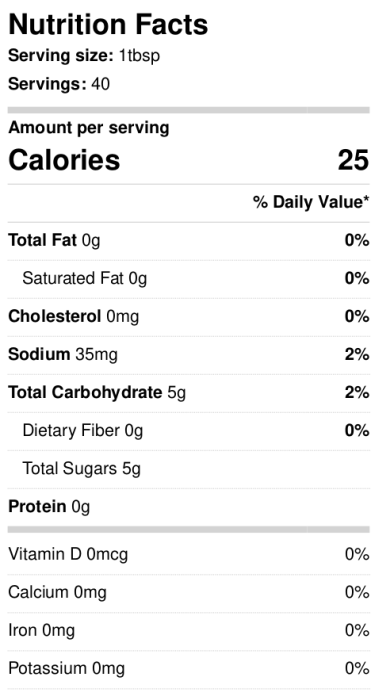
NOTE:
The DRI (Dietary Reference Intake) for protein is 0.36 grams of protein per pound (0.8 grams per kg) of body weight.
This amounts to:
56 grams per day for the average sedentary man
46 grams per day for the average sedentary woman
Step by Step Instructions
Step 1
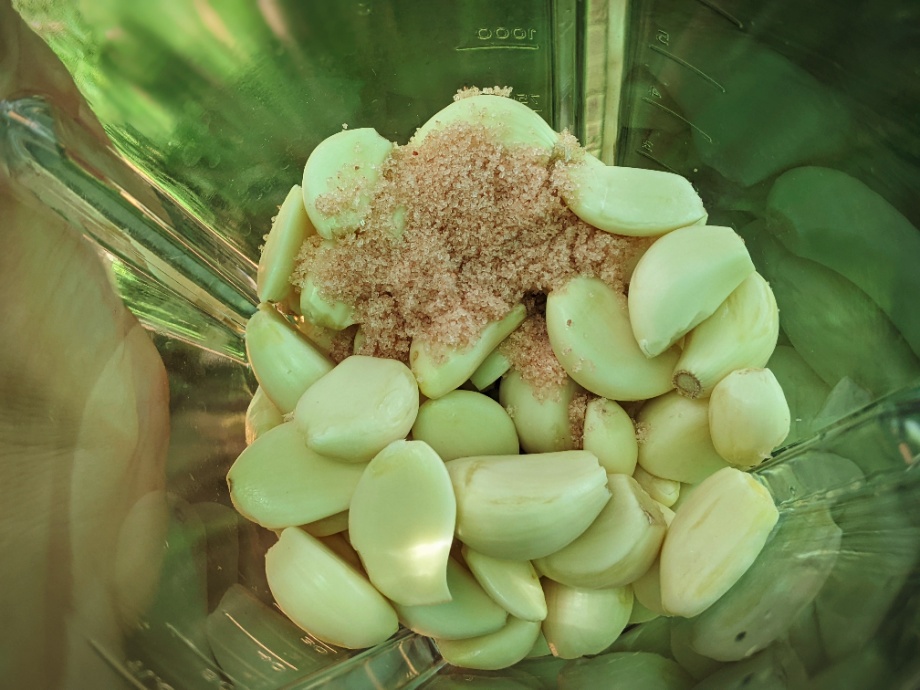
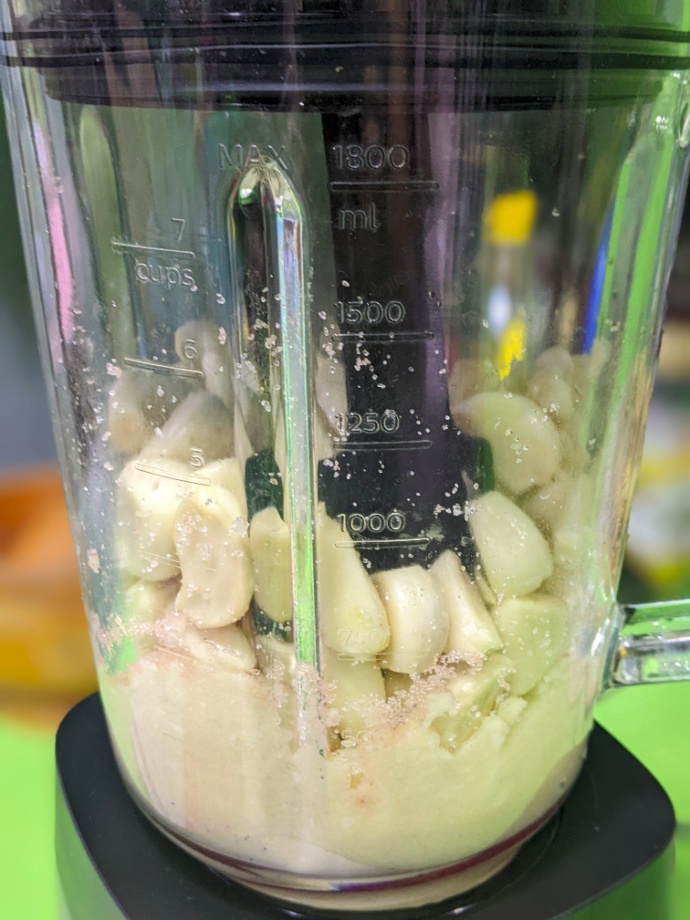
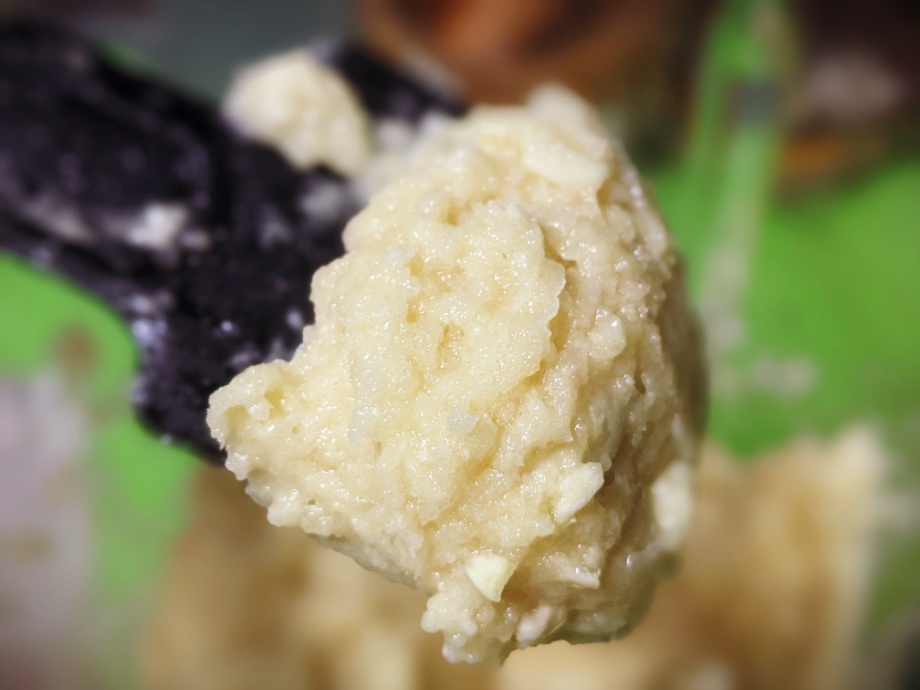
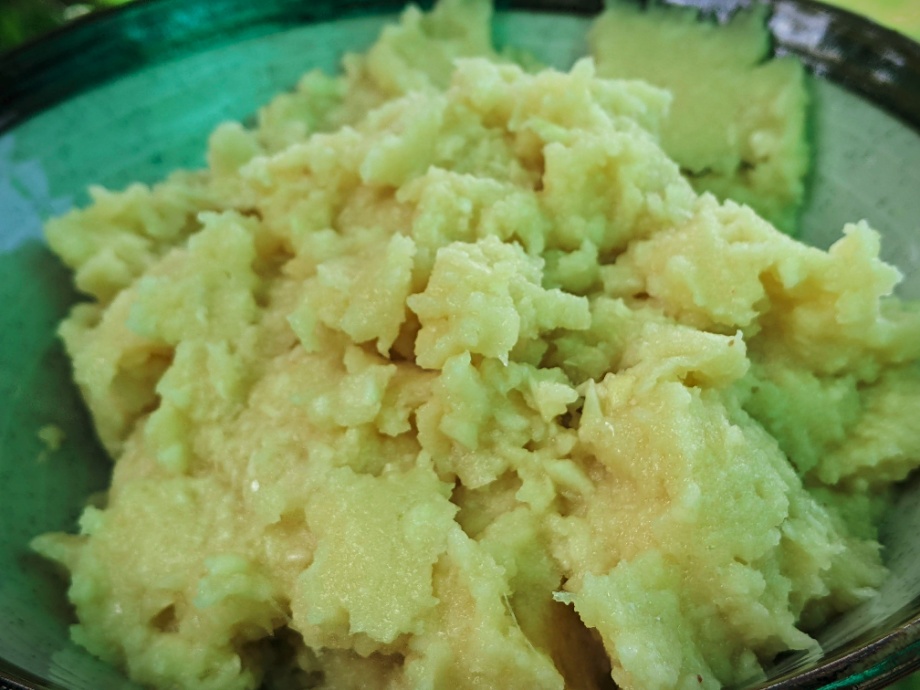
Add the peeled garlic with the salt to a blender and blend until you have a smooth paste. Scrape down the sides while blending to make sure no big garlic lumps remain in the mixture. If you want you can add a little more salt.
Step 2
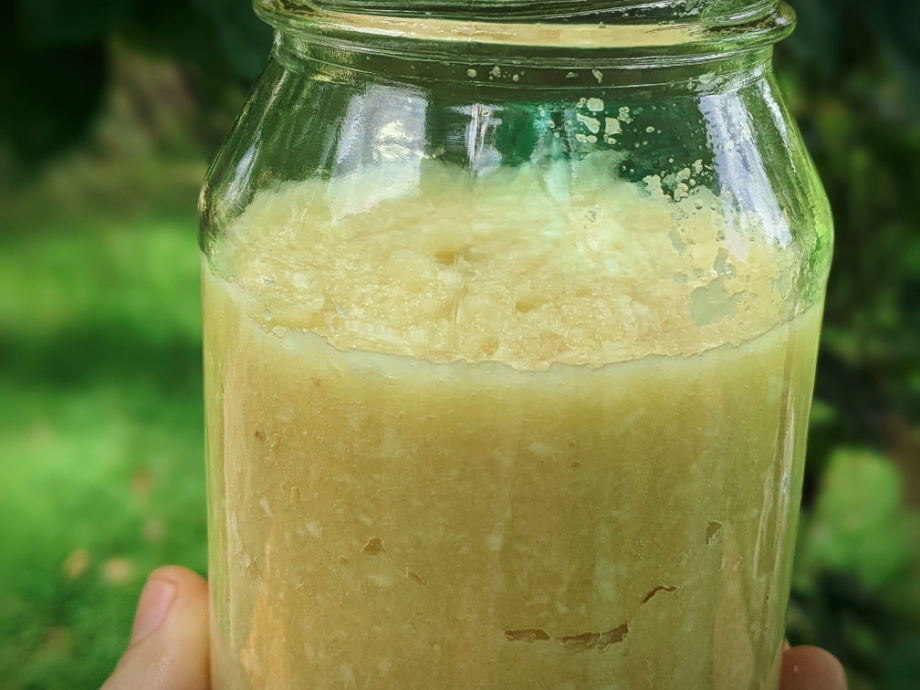
Add the paste to a big (or 2 small) clean glass jar with a lid. Leave about 2.5 cm or 1 inch of space from the top.
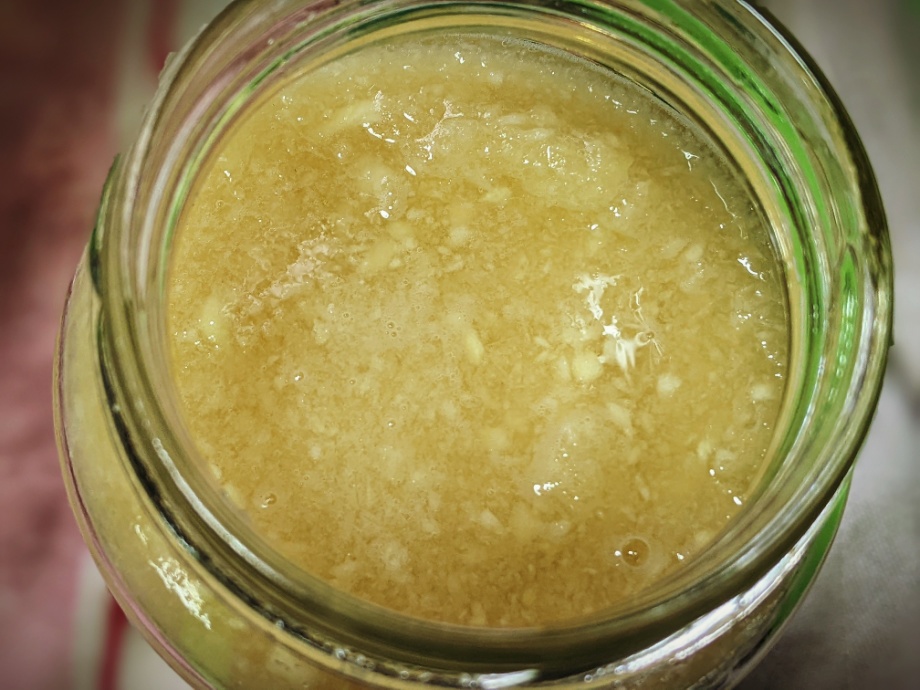
Press down the garlic paste with a tamper or spoon. Depending on the garlic and how much you blended the garlic, the natural liquid (brine) present in the garlic might come up and cover the paste when pushed down.
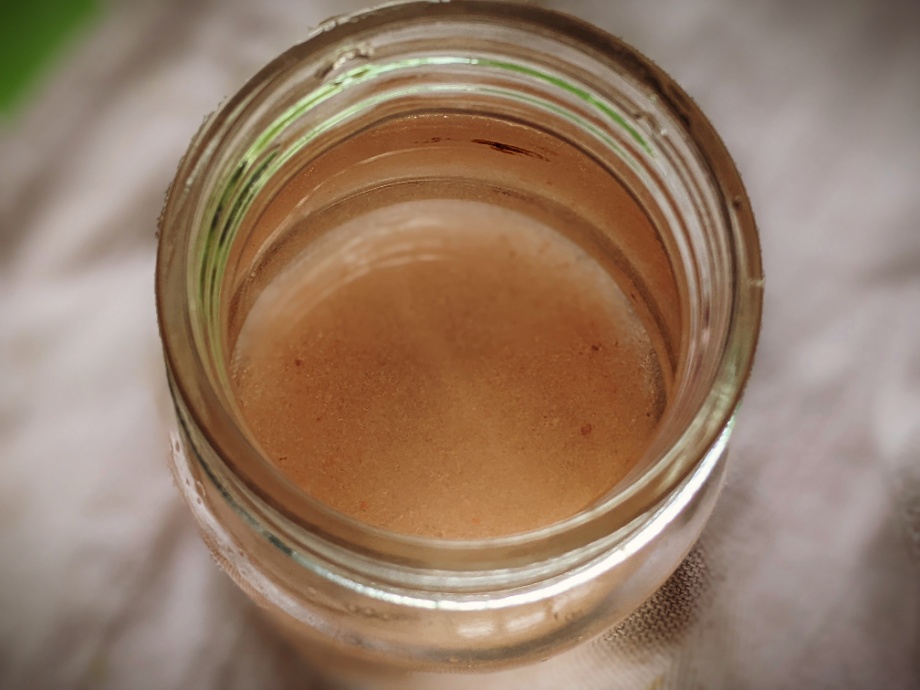
If there is not enough liquid coming up to cover the paste, make a salty brine. The ratio of the salty brine is ½ tablespoon of salt in ½ cup of filtered water. Mix well to dissolve all the salt.
Pour a little of the salty brine over the garlic paste to just cover the paste.
Step 3
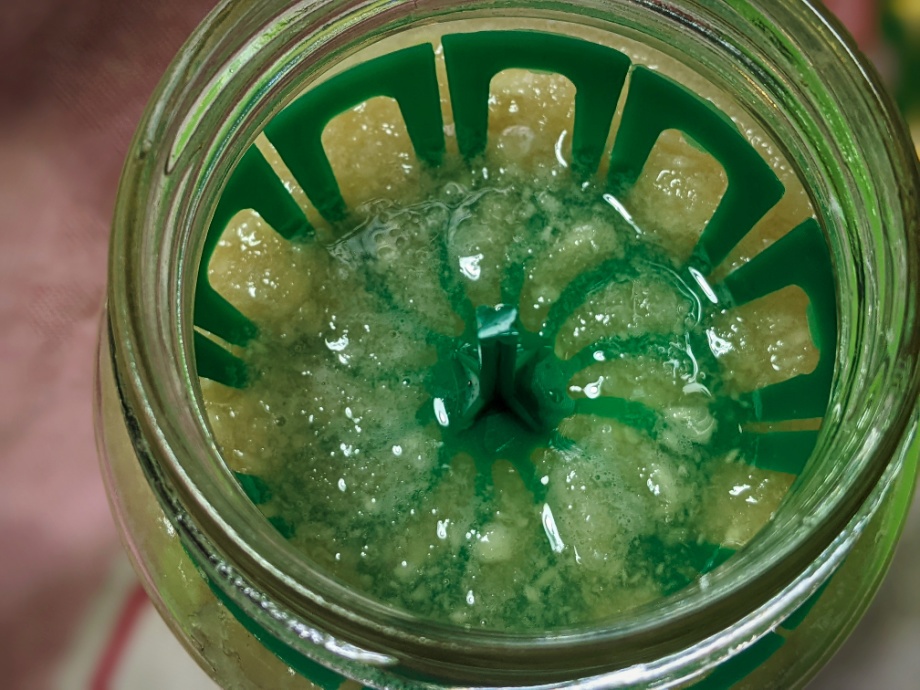
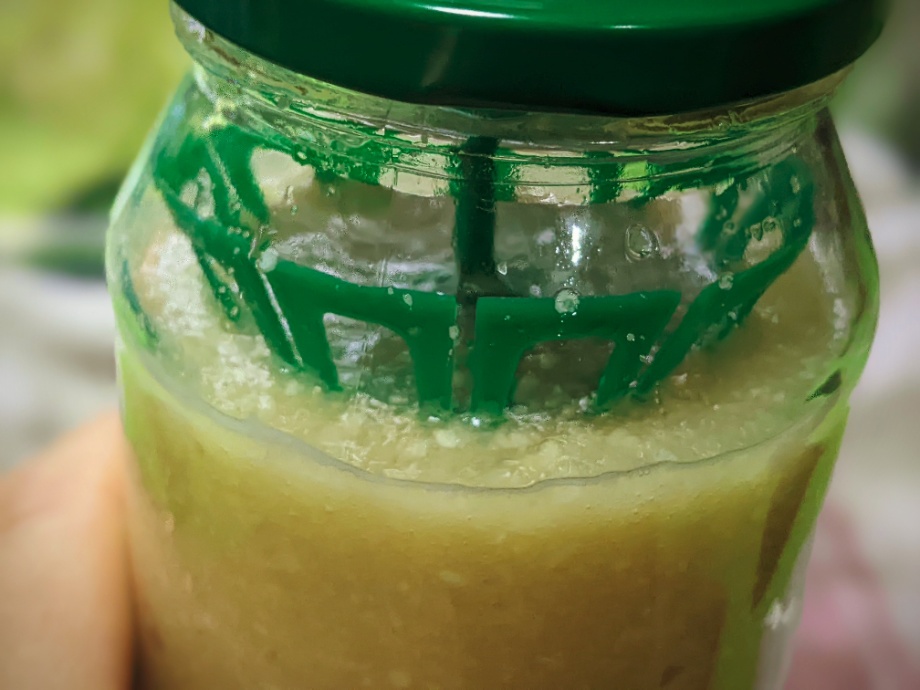
Then add a fermentation weight if you have one to make sure the paste stays submerged to reduce exposure to air and prevent mold to grow on top.
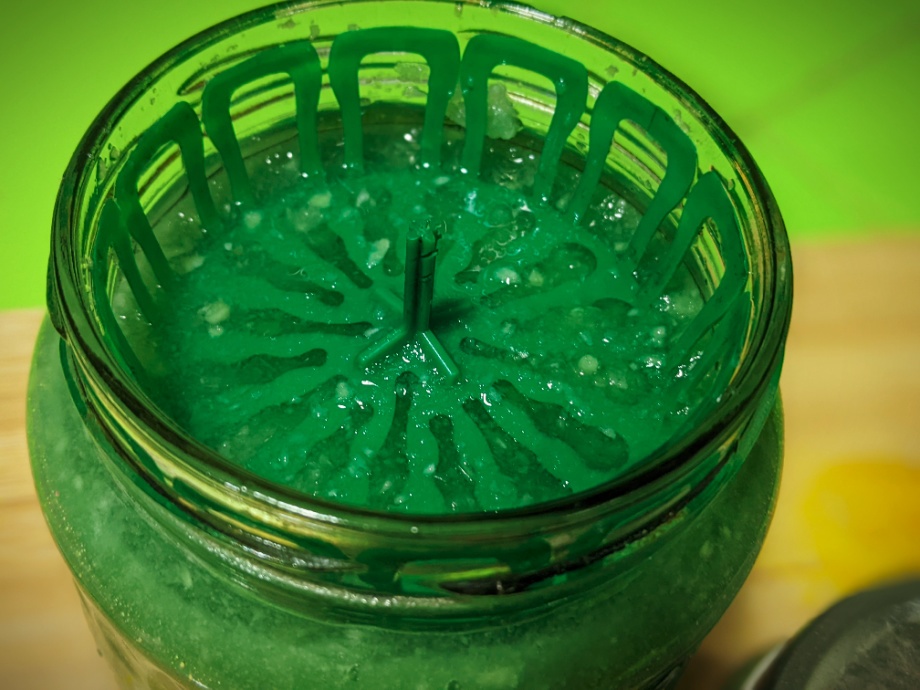
If you don’t have a fermentation weight you can use baking paper pushed into the jar and weighed down with clean marbles or stones, a plastic zip lock bag filled with water, or this green plastic thing I used. I recycled these plastic things from jars of gherkins, olives, and slivered onions. Cut off the stick used to lift the gherkins and you will be left with a perfect device to weigh down your ferments.
Step 4
Close the jar with the lid and set it on the counter out of direct sunlight for 14 to 21 days. I live in the tropics so things go a little faster here.
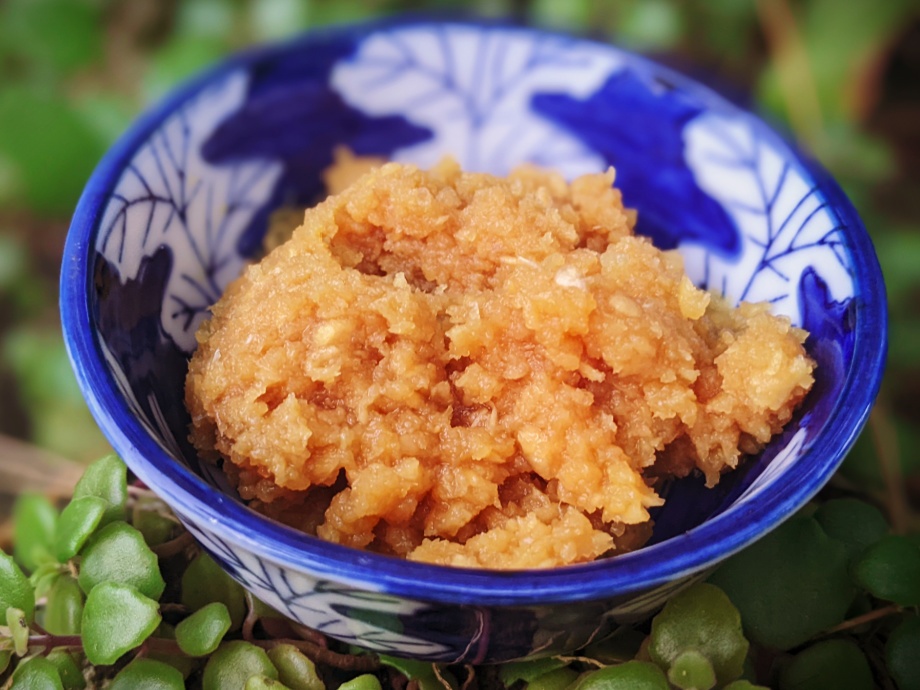
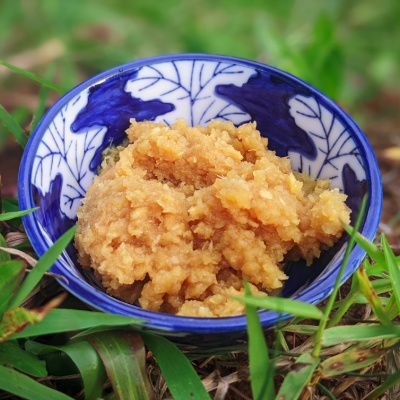
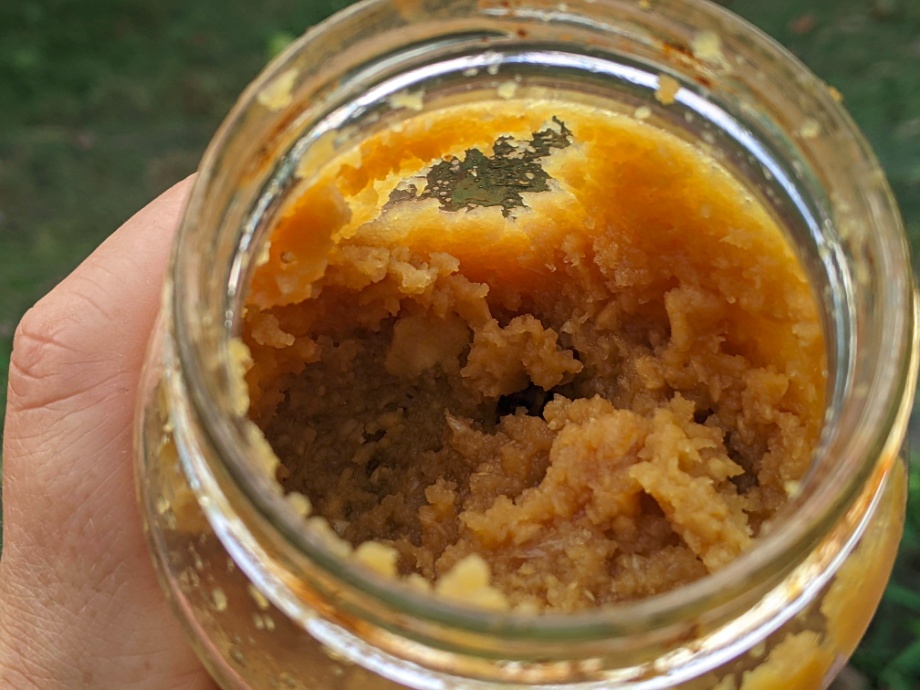
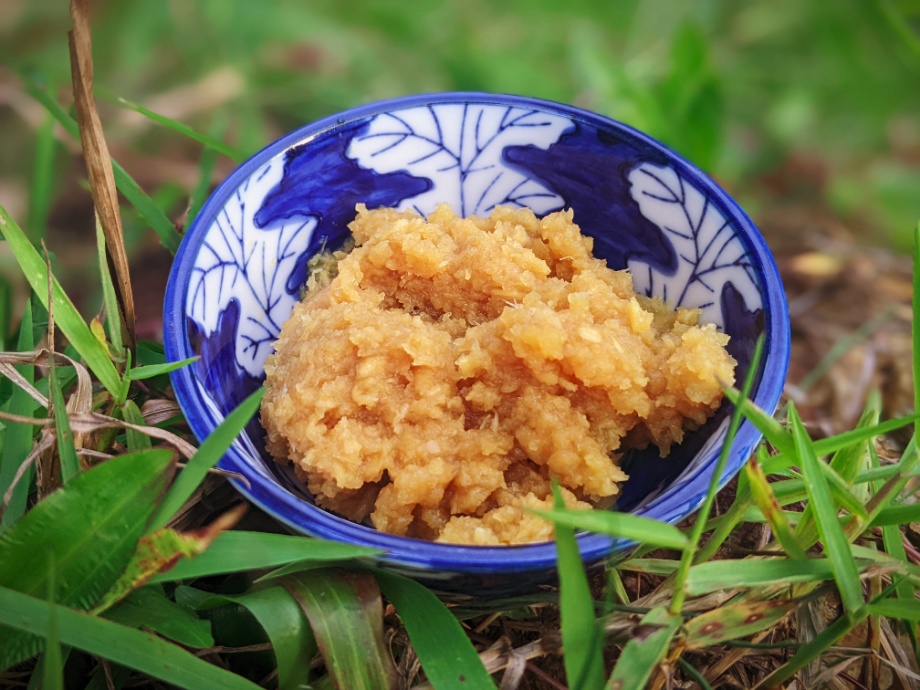
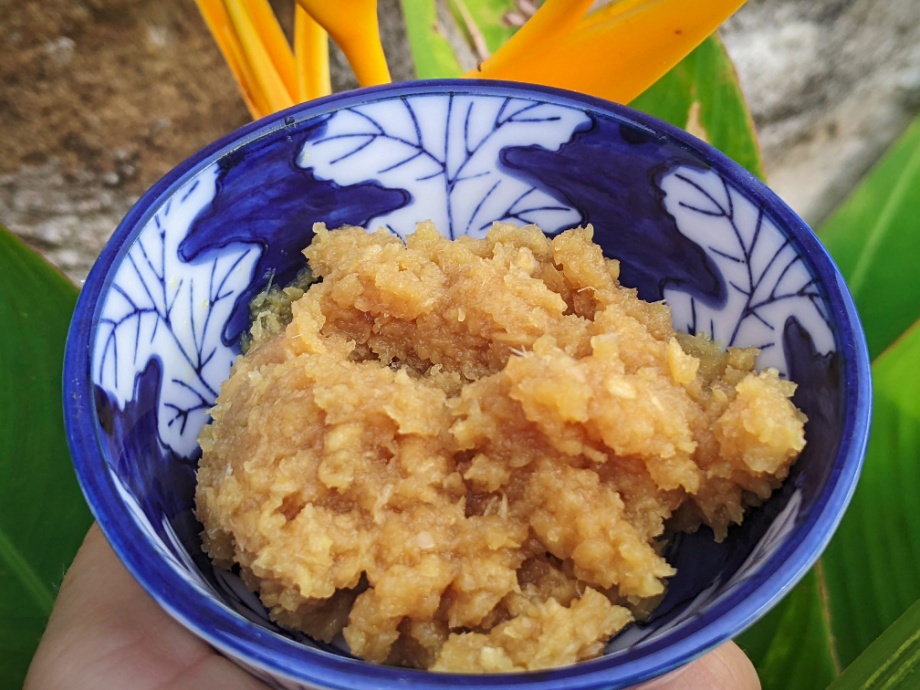
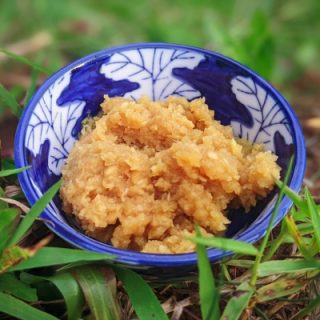
Start tasting after 14 days. It is ready when the spiciness of the garlic has mellowed and the paste tastes more like roasted garlic. The color will be a light brown, caramel color.
Check the ferment every day to make sure the paste is still submerged. Press the paste back down or add more salty brine if needed.
When ready, store the fermented garlic paste in the fridge. The paste will last for up to 1 year.
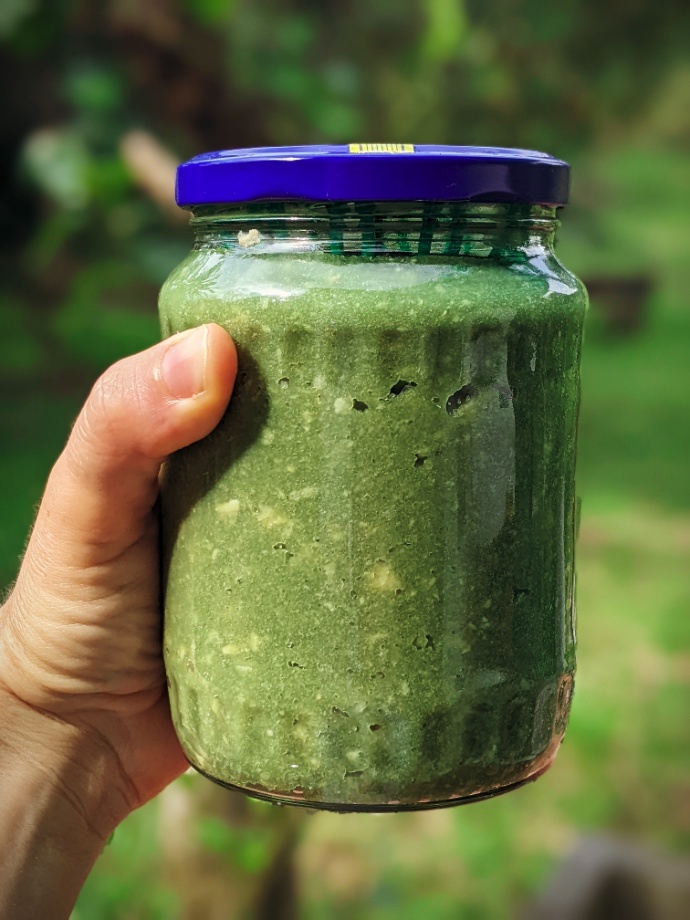
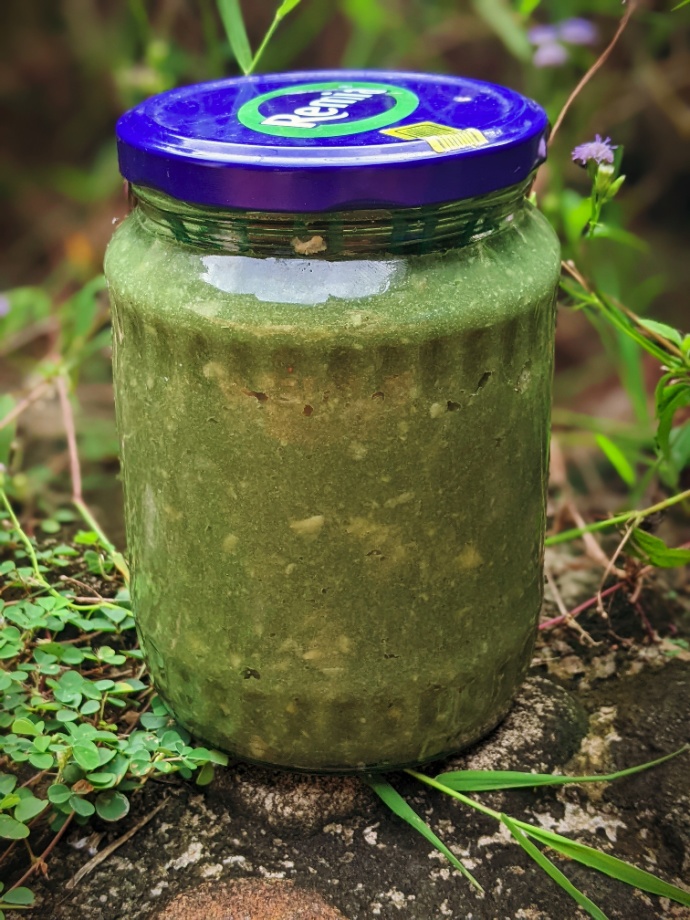
Garlic Paste Turning Blue or Green – Don’t Panic
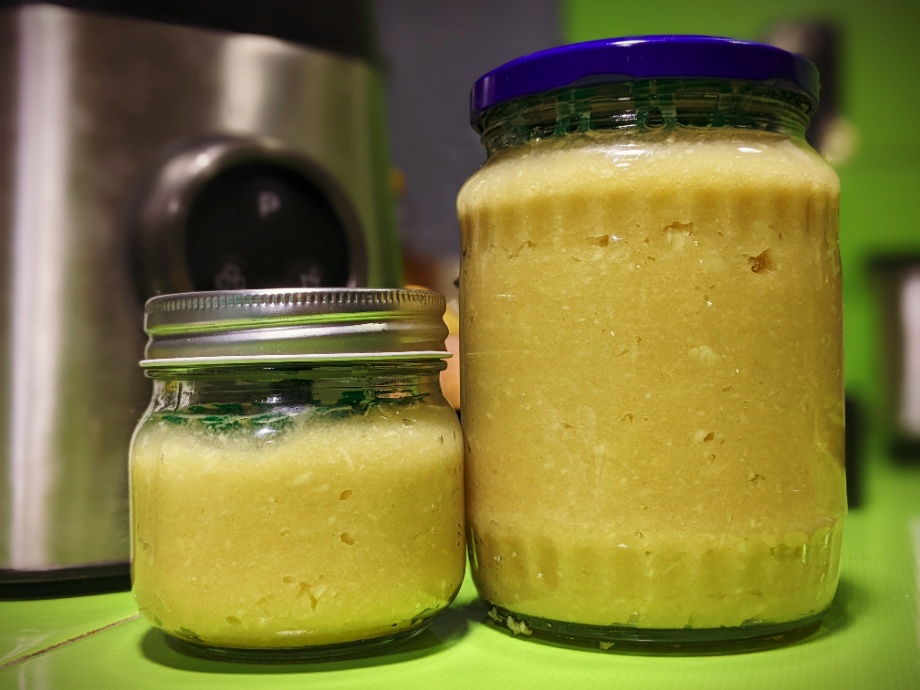
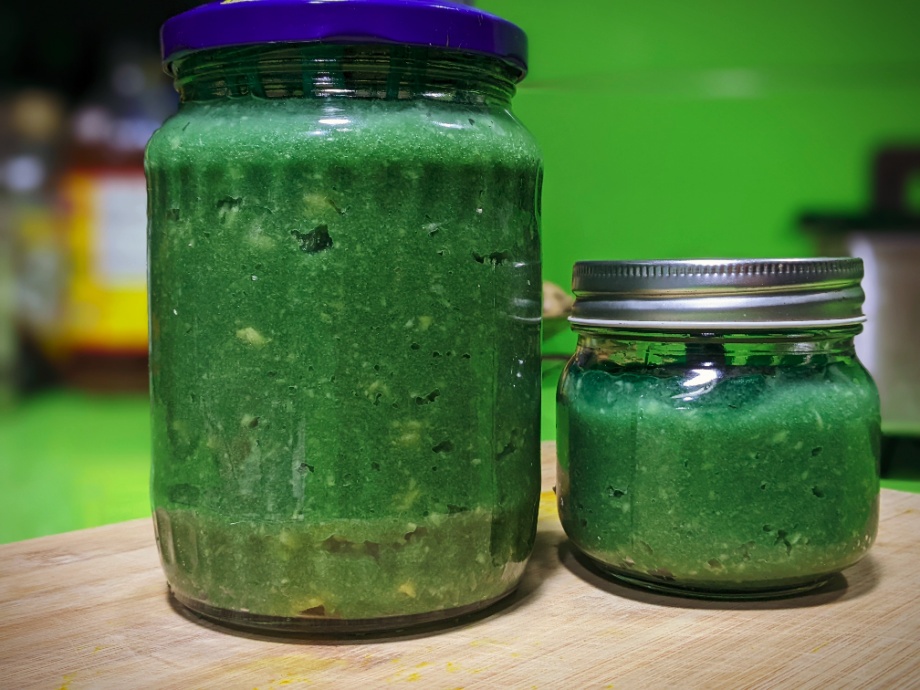
After just a few hours of making the garlic paste, it might turn blue or green. Don’t panic! I know it looks a bit strange but this a normal reaction. Certain compounds in the garlic react with the minerals in the water or salt, which results in the blue or green color.
This is normal and nothing to worry about. The color will change again after a few days to a light yellow color and then light brown when ready.
Easy, Printable Recipe Card
Fermented Garlic Paste
Fermented garlic has this sweet, less sharp, caramelized flavor you get from roasted garlic. Once you make this you'll never want to use raw garlic in your cooking again.
Ingredients
- 18 to 20 heads of garlic, peeled
- 2-3 teaspoons of Himalayan pink salt or good-quality sea salt
- Filtered water as needed
Instructions
- Add the peeled garlic with the salt to a blender and blend until you have a smooth paste. Scrape down the sides while blending to make sure no big garlic lumps remain in the mixture. If you want you can add a little more salt.
- Add the paste to a big (or 2 small) clean glass jar with a lid. Leave about 2.5 cm or 1 inch of space from the top.
- Press down the garlic paste with a tamper or spoon. Depending on the garlic and how much you blended the garlic, the natural liquid (brine) present in the garlic might come up and cover the paste when pushed down.
- If there is not enough liquid coming up to cover the paste, make a salty brine. The ratio of the salty brine is ½ tablespoon of salt in ½ cup of filtered water. Mix well to dissolve all the salt. Pour a little of the salty brine over the garlic paste to just cover the paste.
- Then add a fermentation weight if you have one to make sure the paste stays submerged to reduce exposure to air and prevent mold to grow on top. If you don’t have a fermentation weight you can use baking paper pushed into the jar and weighed down with clean marbles or stones, a plastic zip lock bag filled with water, or this green plastic thing I used. I recycled them from jars of gherkins, olives, and slivered onions. Cut off the stick used to lift the gherkins and you will be left with a perfect device to weigh down your ferments.
- Close the jar with the lid and set it on the counter out of direct sunlight for 14 to 21 days. I live in the tropics so things go a little faster here. Start tasting after 14 days. It is ready when the spiciness of the garlic has mellowed and the paste tastes more like roasted garlic. The color will be a light brown, caramel color. Check the ferment every day to make sure the paste is still submerged. Press the paste back down or add more salty brine if needed.
- When ready, store the fermented garlic paste in the fridge. The paste will last for up to 1 year.
Notes
After just a few hours of making the garlic paste, it might turn blue or green. Don't panic! I know it looks a bit strange but this is a normal reaction. Certain compounds in the garlic react with the minerals in the water or salt, which results in blue or green color.
This is normal and nothing to worry about. The color will change again after a few days to a light yellow color and then light brown when ready.